
Cardiac catheters are long, thin, flexible tubes used in a procedure called cardiac catheterization to diagnose and treat heart conditions.
Cardiac catheters
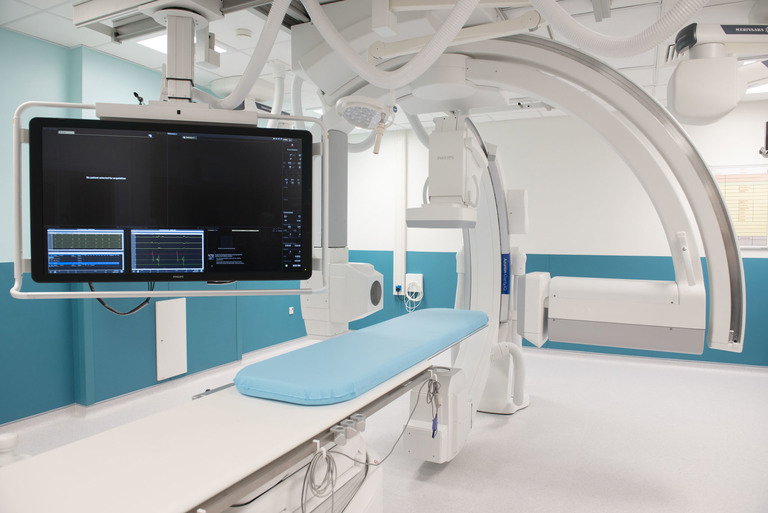
There are lots of different procedures that can be carried out using a cardiac catheter. A cardiac catheter involves inserting a small tube (called a catheter) into a blood vessel, usually at the top of the leg, and this is then guided into to your heart through your blood vessels. X-rays are used to take pictures and sometimes a dye is also used.
You may need a cardiac catheter for diagnostic purposes – which means the doctors are assessing your heart and taking some measurements to see how well your heart works.
You may need a cardiac catheter for some type of intervention such as closing a hole or to put in a stent or to stretch or replace a valve. Your doctor or nurse can talk you through your specific procedure if you’re not sure.
What are the potential risks of the procedure?
Having a cardiac catheter test involves having tubes passed into your heart, so you can imagine, there can be times when complications occur. Your cardiologist will discuss these in detail with you, for your specific case, before you sign the consent form but serious complications generally occur in less than 1 in 1000 cases.
These include:
- heart attack,
- stroke,
- kidney damage,
- death,
- a severe allergic reaction to the dye and
- damage to the blood vessels in your leg or heart.
Having a general anaesthetic can carry small risks in itself.
Your cardiologist will help you understand the balance of risks against the benefits to your heart and health in the long term
Before your procedure
You may need to stop taking some medication before your procedure e.g. anticoagulants like warfarin or rivaroxaban.
You may need to start certain medication before some procedures. You will be told this in advance.
You should not have anything to eat from midnight for morning procedures or 06.30am for afternoon procedures. Your letter will tell you what time this is for you. You can drink clear fluids for up to two hours before your procedure.
PLEASE BRING ALL OF YOUR MEDICATION WITH YOU INTO HOSPITAL
Please bring an overnight bag with pyjamas, dressing gown, slippers and toiletries. You can use your mobile phone on the ward if you wish although we cannot accept any responsibility for lost or stolen property. Wi-Fi is available.
Carefully shave your groin on both sides the day before your procedure (the ward staff can do this if you prefer) and shower at home on the morning.
Back to topDischarge advice
You can usually go home the next day. You may need some further investigations before you can be discharged such as an ECHO, chest X-ray, ECG and urine dip test. We will aim to discharge you by late morning but this depends on your investigations. Please ask someone to collect you.
- You can usually re-start your anticoagulant medication on the same day as the procedure but your doctor will advise you on this.
- Please avoid strenuous exercise, heavy lifting, vigorous walking or house work for three days. This is to prevent bleeding at the top of your leg.
- For certain procedures the DVLA state you should not drive for four weeks, ask your doctor or nurse if this applies to you.
- You should not need more than one week off work depending on your job. Sick notes can be provided if necessary.
- Showering/bathing – avoid long baths for the first few days and please avoid vigorous washing or drying of the wound.
- Your groin may be a little sore, paracetamol should be adequate. It is normal for the site to be bruised and there may be a small lump under the skin.
- Observe the wound for signs of infection like oozing, swelling, redness and becoming more tender or hot to touch. If it starts bleeding once you’re at home apply pressure and telephone for advice. Please also telephone for advice if your leg becomes discoloured or cold to touch or you experience “pins and needles”. People you can telephone for advice include the Nurse Specialists, your GP or 111.
- If you are concerned about your breathing, colour, or if there is excessive bleeding from the wound, please call 999 for an ambulance. You will be taken to your nearest accident and emergency unit for assessment.
A letter will be sent to you and to your GP outlining your procedure and the outcome. You will be seen in clinic around six weeks after your procedure depending on the procedure performed.
The Congenital Heart Disease Nurse Specialists are available by email or telephone Monday to Friday, 8am-4pm.
Back to topGeneral Information
Ward L14 is on E Floor in Jubilee Wing.
The majority of the patients on ward L14 are people who require procedures for acquired cardiac disease e.g. stents after a heart attack. The staff are very experienced in looking after people with congenital heart disease too.
Visiting times
A maximum of two visitors allowed per bed.

We have accommodation for relatives which is provided by the charity Take Heart – if this is required, please ask the nursing staff and a room will be provided if one is available.
Children may only visit at discretion of the nurse in charge.
Useful Contact Details
Dr Bentham, Dr Velasco-Sanchez and Dr Kang’s
Secretary:
