
A pancreatic digestive enzyme that appears unchanged in the faeces. Low concentrations are found in patients with exocrine pancreatic insufficiency.
Tube
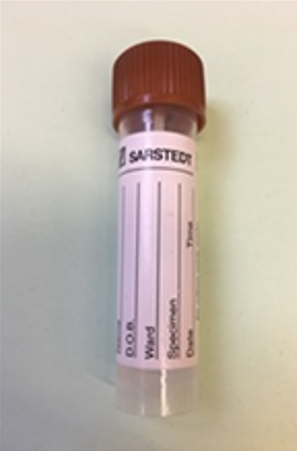
Faeces container.
ID
29947.
Availability
Weekdays. Batches are run weekly.
Additional information
Elastase not fully developed in new-borns. Not useful in identifying mild disease. Very watery samples should be avoided because the dilutional effect of the stool water can lead to a falsely low result. If a low result is found in a watery sample, a repeat sample will be requested by the laboratory. Very hard / dry stool samples cannot be processed.
Turn around
2 to 3 weeks.
Send to
Enterics Laboratory, Microbiology Department, Centre for Laboratory Medicine, St James’s University Hospital, Beckett Street, Leeds, LS9 7TF.
Collection Con
Instructions for laboratory: Refrigerate or freeze if not sending same day. Avoid multiple freeze-thaw cycles. Samples are stable at room temperature and at +4 to 8ºC for 7 days. Samples that are frozen at -20ºC are stable for up to 1 year.
Sample REQ
A single random formed stool sample approx. 2 g (cherry-sized). Avoid very watery or very hard stools where possible.
Ref. Range Notes
Normal: 200 to >500 ug/g stool.
Moderate to mild exocrine pancreatic insufficiency: 100-200 ug/g stool.
Severe exocrine pancreatic insufficiency: <100 ug/g stool.
Units
ug/g (stool)