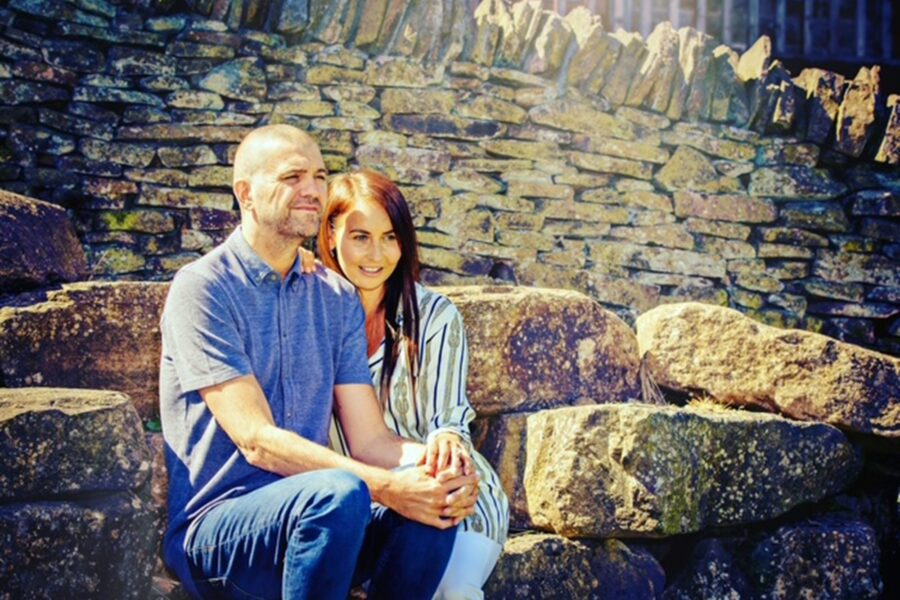
Leeds United football legend Dominic Matteo has paid tribute to the ‘life-saving’ team of clinical researchers at the Trust, who treated him for brain cancer.
Former LUFC captain Dominic, who was speaking on World Cancer Day, was diagnosed with a rare, cancerous brain tumour called an anaplastic ependymoma in 2019.
He underwent critical surgery at Leeds General Infirmary and several months of radiotherapy before getting the news that his condition was stable. He now has regular scans at the hospital to monitor his condition.
Since then, he has dedicated his time to speaking about the impact brain cancer has had on his life and the amazing team of Leeds surgeons and oncologists who care for him.
His tribute comes as World Cancer Day was marked across the globe on Wednesday February 4, highlighting how sustained scientific research, clinical trials, and innovation directly impact survival and quality of life for people with cancer.
And it follows a government announcement of an increased focus on brain cancer and other rare cancers in its National Cancer Plan.
Dominic said: “Brain cancer research hasn’t always had enough support – only 1% of all the money spent on cancer. It’s a low number for something that’s such a big killer. It’s great to hear that more funding is going to brain cancer research – I know that they will find a cure for it someday.”
Dominic, 51, is married to Jessica and has three children, daughters Luisa, 20 and Elin, 16, and son Luca, 12. Alongside his regular speaking events, Dominic co-owns BD Sales Consultancy and works as an ambassador for the company alongside his former teammates Neil ‘Razor’ Ruddock and Ian Harte.
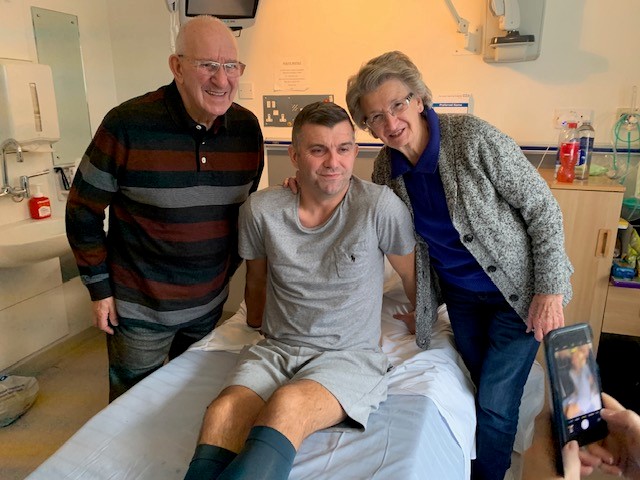
He was treated by Ryan Mathew, Associate Professor at the University of Leeds and Honorary Consultant Neurosurgeon at the Trust, and Professor Susan Short, a clinical oncologist and adult brain tumour researcher.
Professor Short is co-director of the Leeds Cancer Research Centre, a clinical research partnership between the University of Leeds and the Trust.
She said: “Dominic’s experience highlights the importance of research into rare brain tumours. Without the understanding of how these tumours develop and respond to treatment, we would not be able to achieve the outcomes that patients such as Dominic see today. Rare cancers are a key area of focus for Leeds Cancer Research Centre, and we hope that our work will help many more people like Dominic live long, happy and fulfilling lives too.”
Mr Mathew said: “Dominic’s kind of tumour is extremely rare, and it’s rarer still for it to be diagnosed in adulthood. Rare cancers can be overlooked in research funding, for many complex reasons. But understanding how these cancers develop is key to unlocking new treatments that can help people like Dominic in the future. That’s why Leeds Cancer Research Centre is focusing on the genetics of cancer, providing new insights into the biology of disease and developing new approaches to detection and personalised medicine.”
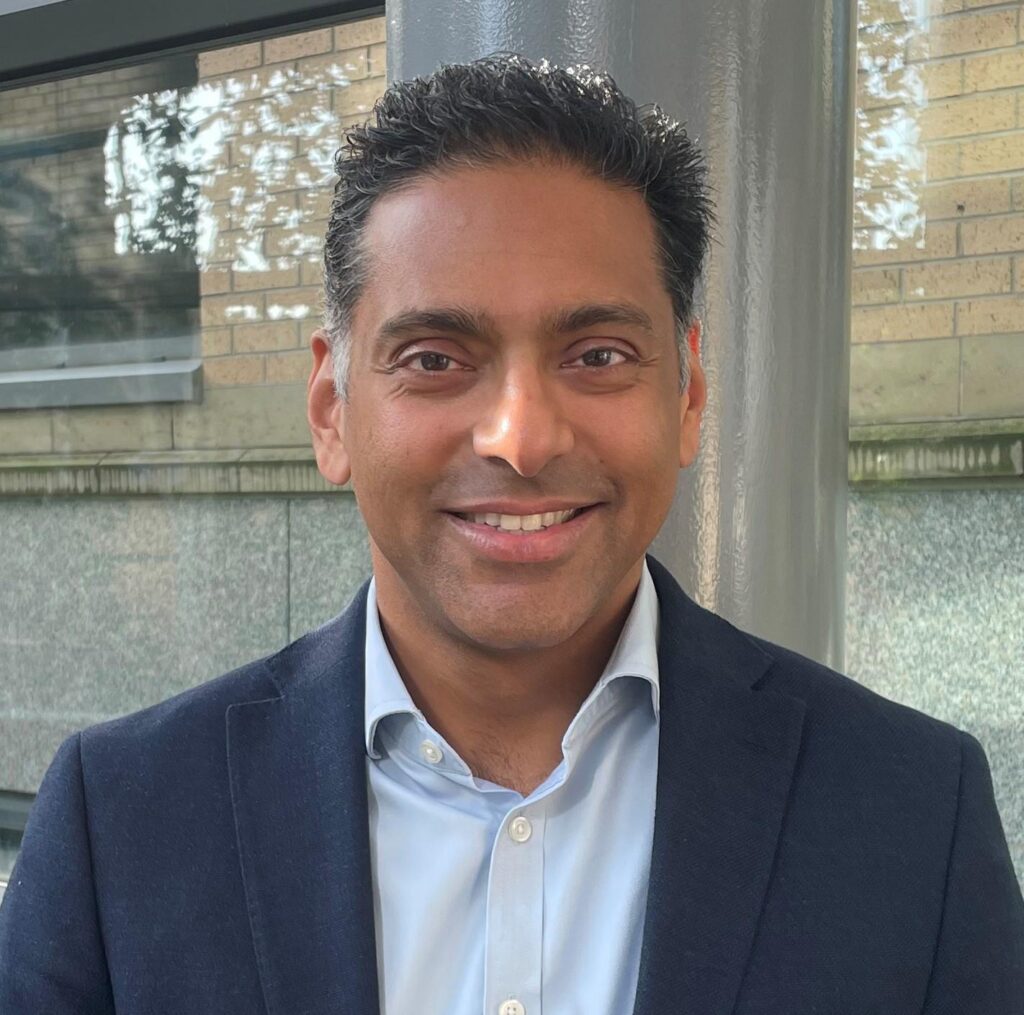
Ryan Mathew, Associate Professor at the University of Leeds and Honorary Consultant Neurosurgeon at the Trust
Dominic’s story in his own words
“My doctors think I lived my whole life and played through my football career with a tumour lying dormant in my head.
“Then late in 2019 something happened to the tumour. I was due to fly to Singapore to play for Liverpool in a veterans’ match against Manchester United. I had a health check and ended up collapsing in the MRI machine.
“Looking back, there were warning signs, but I didn’t think anything of them. I was working for Sky Sports, a job I loved. I was driving to Hull to do Soccer Saturday, and I bumped the car, which was really unusual for me. I noticed my eyesight was a bit different, but I thought nothing of it and went to do Soccer Saturday. But when a goal went in, I had to ask the cameraman who scored, and that was really strange because I always knew all the players’ names.
“Another time I had to pull over while driving to be sick, which I never am. I just thought I was a bit ill – I didn’t think it was anything like this.
“My health check showed I needed a brain scan at Calderdale Royal Infirmary. As soon as I went to get into the machine, I felt weird. It felt like something had changed – and then I collapsed in the machine. When they took me out, I didn’t know what I was doing. They rushed me straight to Leeds General Infirmary.
“There was Dr Ryan Mathew and a few more doctors, and they were saying, this needs to be done now. I was fighting for my life from that moment.
“Ryan saved my life. They removed the tumour and I had radiotherapy to get rid of any remaining cancer cells. Ryan was very proud of my scar – and I am too. I see people with the same scar, and I know what they are going through.
“My oncologist was Professor Susan Short, who is fantastic. Both Susan and Ryan have been so good and kind to me. They were both there when I was told the news that I had a brain tumour. Both me and my wife Jessica really struggled with that. My kids don’t know the full extent of it, but I tell them they can ask me anything they want. Luca knows my vision isn’t good, so he guides me when we are out together.
“And everyone at the hospital was so supportive and kind. Without that support network, of family and friends and doctors and nurses I’d be in no man’s land.
“My memory was really affected, and I don’t remember a lot from that time. I wish I could remember all the names of the doctors and nurses at the hospital. The drugs you are on are very strong – I was on really strong steroids, and I couldn’t sleep. I remember sitting and watching TV and they would sit with me for a bit and chat. That’s what you need, and it really helped me.
“I was in hospital four to five weeks. I lost sight in my right eye, and I lost all my cognitive skills – I didn’t even know how to brush my teeth.
“I tried to relearn to read and write. A teacher who was a Leeds fan wanted to help me. We tried for a year, but I couldn’t get it. It was stressing me out, and I try to get rid of stress – it’s a killer. I think the reading has gone now and that means I can’t script anything. When you have scripts on TV it’s easier, but I think I’m more authentic. And if I make a mistake, it’s fine – I own it. Everyone makes mistakes.
“I’ve had a lot of support through football. It’s a community. I got a lot of messages from fans who didn’t like me – Man United fans! But they still messaged me to wish me well and that meant a lot. “(Former Leeds United manager) David O’Leary and (Liverpool team-mate) Steve McManaman came to see me in hospital – the nurses were all excited to see Steve! And (Leeds united legend) Eddie Gray even got the bus up to the hospital to visit me.
“And now, when I’m at Elland Road, there’s a lot of people in similar positions. I feel privileged I can speak to them. We have a different respect because of what we’re going through. You always want the best for each other. Down at Elland Road, people will say, ‘you’re looking well!’ As blokes, it’s not often something you say – back in the day you’d pretty much just grunt at each other. But I hope that the world is changing. You need people to look out for you.
“I’m six years on now. I have regular scans, and it’s not very nice in the MRI machine but I just think about my wife and kids when I’m in there to distract myself, because it has to be done. My last scan was stable, which is all I can ask for. Every time they are stable, I go and celebrate. I have a scan coming up soon and if it’s stable, I will be celebrating.
“I stay positive and keep myself fit – that’s really important. Every morning, I train and I have green smoothies – I look after my diet. Before, I was that person that had to go for it with everything, and now I have to manage that. When I’m on the treadmill I want to be running as fast as I can, but I know I can’t do that now.
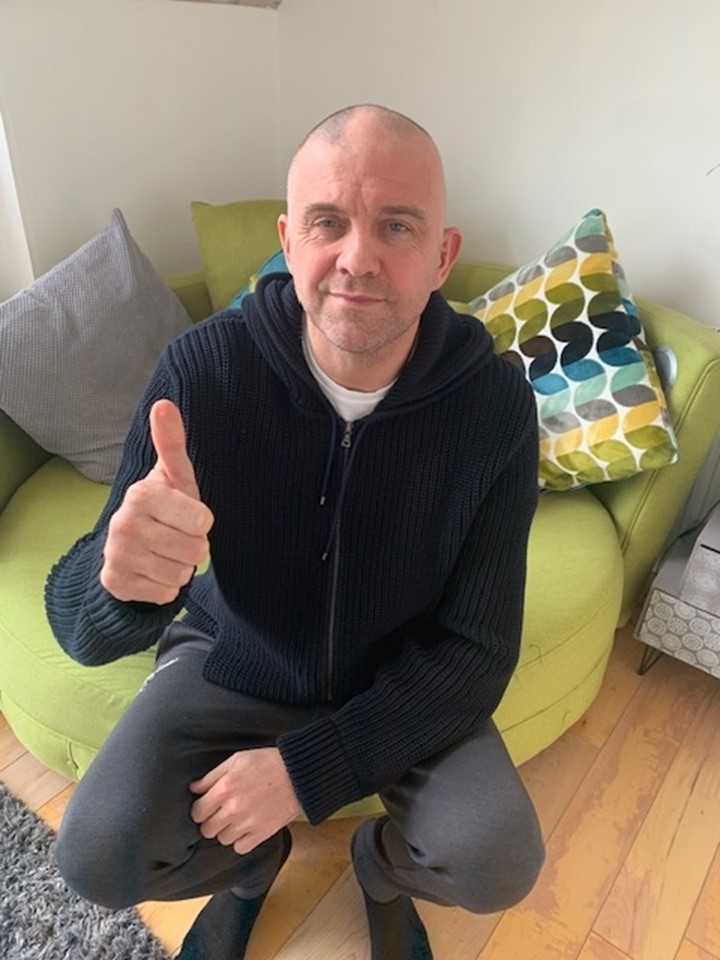
“Now I go all over the world telling my story. I want to share my story – if it helps one person then it’s worth it. And when you’re busy, you don’t think about things as much. And if I’m helping other people, I’m helping myself.
“I try and be positive. When you get bad news, you just have to find a way to think positive and I think I got that positivity through football. When I was starting out, I had ability, but I put the work in even harder. My dad said it was all stepping stones to getting where I wanted to be, and I think that mindset that helped me in football is helping with my recovery.
“When I played football, I was always boisterous and noisy. You need to have more of a voice when you’re the captain. After I retired, I bought a bar in Leeds. (The Rock Bar, Call Lane – now closed). I’m completely out of that now. I love all that kind of stuff, but now I’m not good with big groups of people and I have to manage that and protect myself.
“After something like this, you can’t quite do what you used to do, and it’s how you accept that. I always say, I’m lucky to still be here. I don’t know what’s around the corner, but I’ll just keep going. I’m taking one step at a time.”