Teenagers and children receiving cancer treatment at Leeds Children’s Hospital are some of the youngest in the UK to benefit from home chemotherapy.
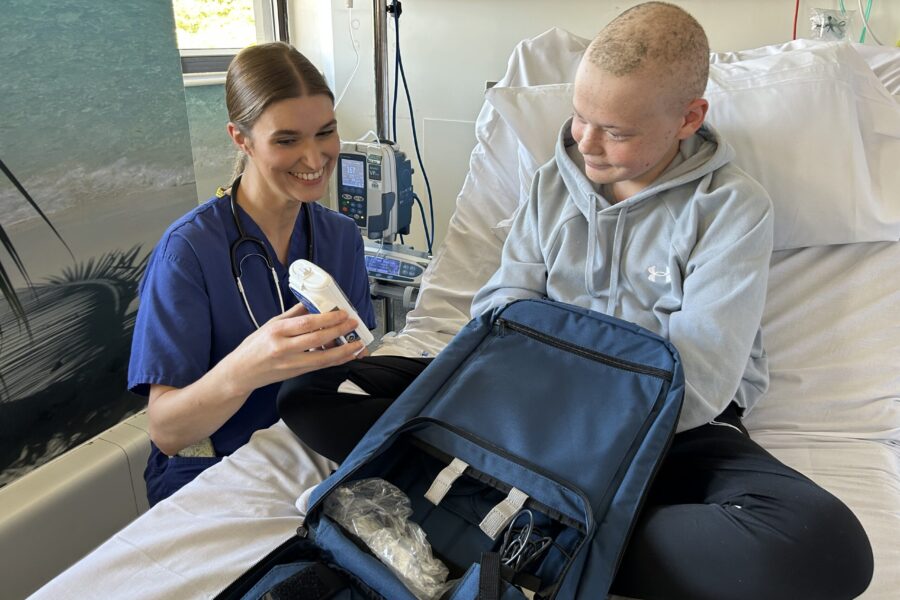
Home or ‘ambulatory’ chemotherapy is an alternative to being admitted to a hospital ward for chemotherapy. Patients who meet the criteria can leave the hospital connected to a backpack containing a pump which continuously administers their treatment whilst at home or outside the hospital setting.
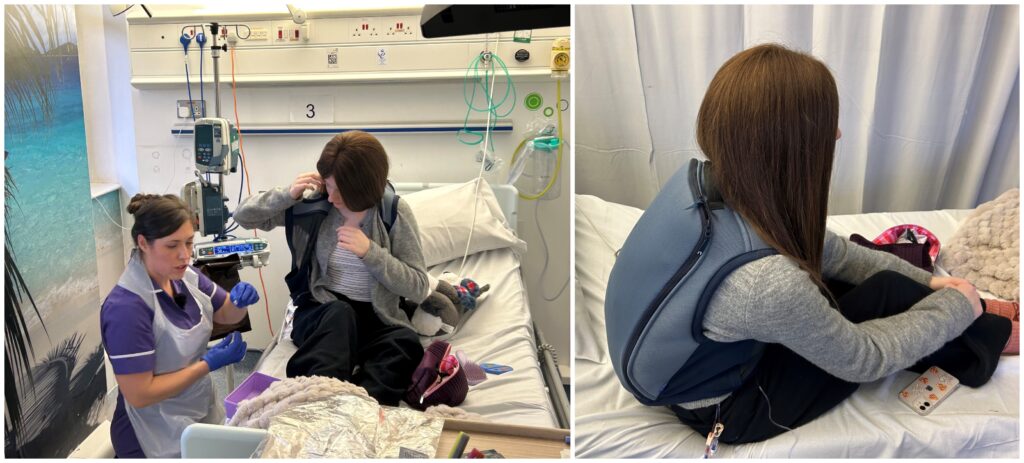
Ambulatory Chemotherapy (AC) is already in use widely for adults, and in some other centres for teenagers. The team at Leeds Children’s Hospital recently launched AC for patients in the Yorkshire region, with plans over the coming months to expand the service to treat some of the youngest patients in the UK.
Patients receiving AC can leave the hospital and be at home, including overnight, with daily visits to the hospital instead of a long inpatient admission.
Being at home means that patients can be more comfortable and better rested, socialise with friends and family, eat their favourite foods and be more distracted from their treatment. Caring for a child at home also eases the burden on parents and carers.
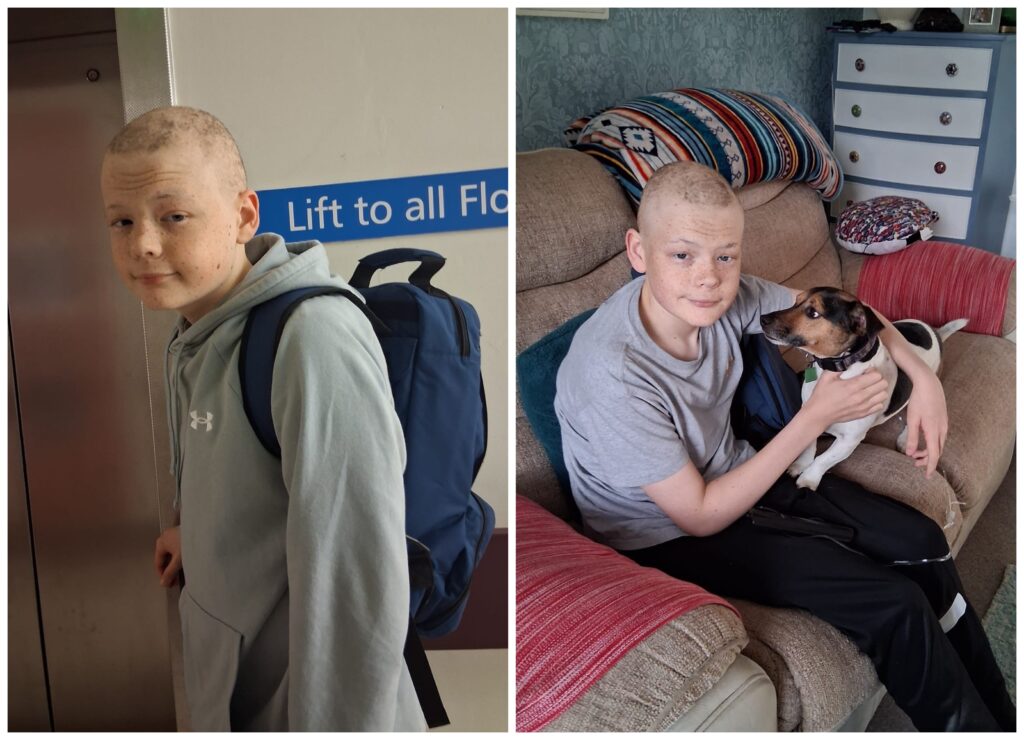
17-year-old Oscar from York was the first Leeds Children’s Hospital patient to benefit from AC in late 2025. Oscar is receiving treatment for Rhabdomyosarcoma, a cancer of the soft tissues. Following surgery to remove his tumour Oscar requires several cycles of chemotherapy, given every three weeks. Thanks to AC Oscar can spend much of his treatment time at home.
Oscar said:
‘When I’m at home I can sleep better, it’s not noisy like in hospital, I can have friends and family over to see me more easily, I can see Toby (Oscar’s dog) and I can use my computer…
…Chemo leaves you with a heightened sense of smell and certain smells can make you feel really sick. For me this was hospital food so being able to eat at home makes a huge difference’
Oscar’s Mum Charlie added:
‘As a parent, when you have your child at home you feel like you can look after them, you don’t feel in the way. As a single parent there’s so much that you can’t do when you have a child in hospital for a long admission’
During his AC cycles, Oscar comes to hospital once a day, for three days in a row. Whilst in hospital, he is checked by the medical and nursing team, speaks to pharmacy about his medicines, has blood tests, and has his treatment connected to his central line (a tube into his chest for giving treatment).
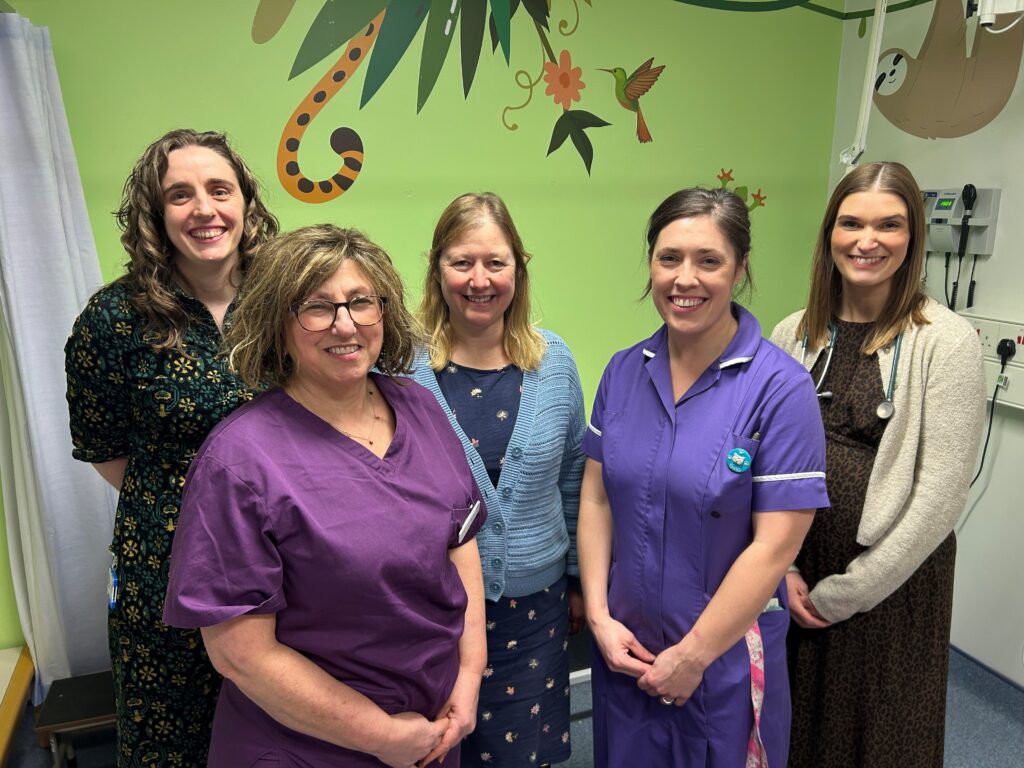
Oncology Registrar, Dr Jennifer Fox has helped to set up the Leeds service:
‘Our ambulatory chemotherapy service is an exciting new initiative allowing children, young adults and their families the opportunity to minimise their time spent in hospital. This is especially important for many of our patients, who at present require prolonged stays in hospital on a regular basis for their cancer treatment.
Ambulatory treatment aims to minimise the side effects commonly experienced with inpatient chemotherapy, allowing patients to eat better, sleep better and feel more themselves out of the hospital environment.’
So far 7 patients between the ages of 8 and 17 have been treated on the AC pathway at Leeds Children’s Hospital.
The project has been made possible following a two-year project funding grant awarded by the West Yorkshire and Harrogate Cancer Alliance Innovation Fund.
Jason Pawluk, Programme Director for West Yorkshire and Harrogate Cancer Alliance said:
‘The Cancer Alliance’s annual innovation funding competition, run in collaboration with Health Innovation Yorkshire and Humber, funds projects that promote early cancer diagnosis and better care.
It aims to build a culture of innovation, essential to improving early diagnosis and better care, using cutting edge technology. Together with our partners, we are committed to creating a local culture of innovation, adopting and developing new ideas, which has a positive impact on patient experience.
This initiative, that provides home chemotherapy to children and young people, is a perfect example of this – bringing so many benefits that improve the quality of life of young cancer patients in our region.’
Running alongside the service development are two research projects, funded by the Childhood Cancer and Leukaemia Group (CCLG), led by Dr Jess Morgan (Consultant Paediatric Oncologist at Leeds Children’s Hospital and Deputy Director of the Candlelighters Supportive Care Research Centre at the University of York):
- a national service evaluation reviewing AC services for children and young people across the UK
- a systematic review of existing research around children’s AC globally.
Both research projects will help the team at Leeds Children’s Hospital to develop the service further.