
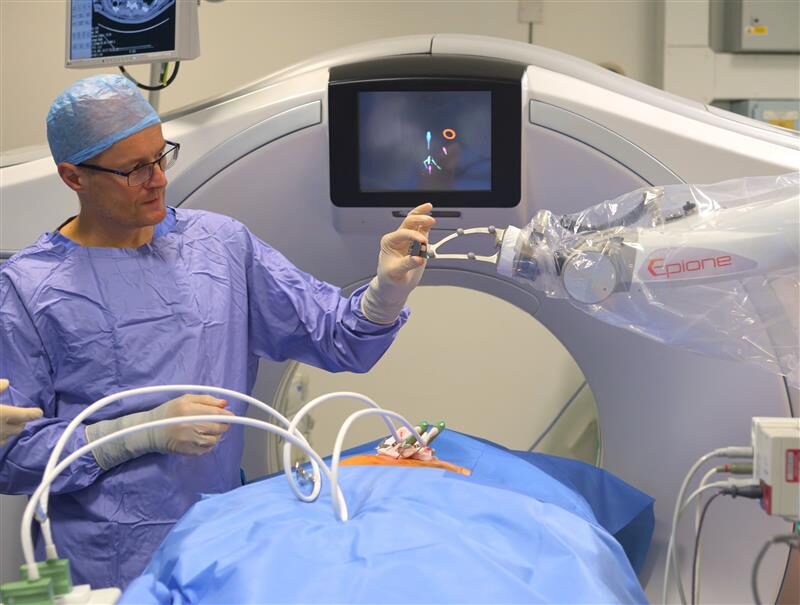
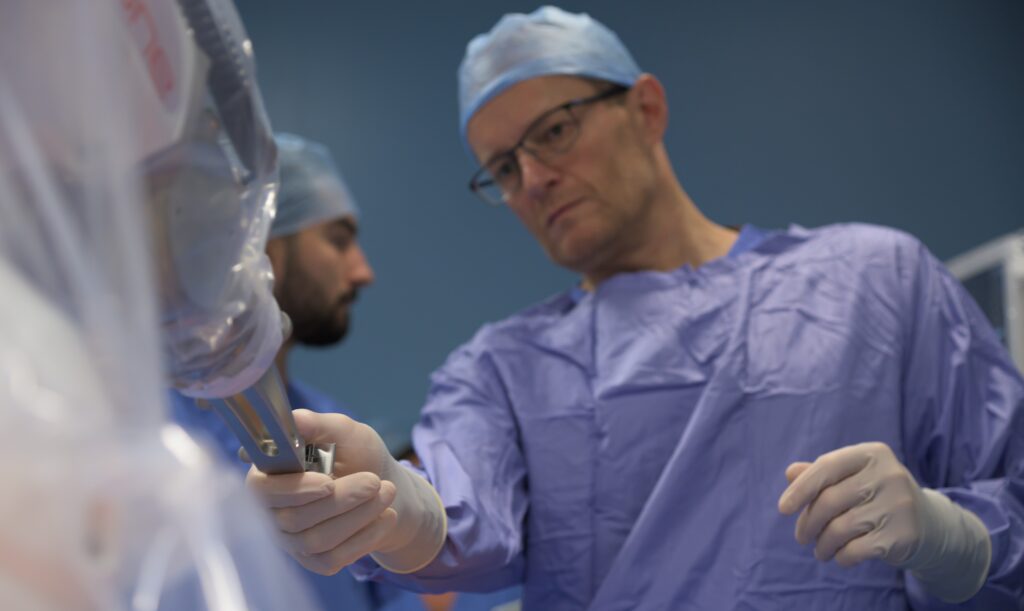
The new Epione robotic guidance system is the latest technology which enables precise minimally invasive CT-guided ablation of tumours through robot-assistance. This system allows clinicians to accurately locate and destroy cancerous tissue without the need for traditional surgery.
Clinical teams use Epione’s robotic arm to carefully place needles which destroy tumours by freezing or burning. This offers patients an effective treatment with fewer risks and shorter recovery times.
Dr James Lenton, Vascular & Interventional Oncology Radiology Consultant whose teams are using Epione said: “At LTH we have an excellent record of offering innovations that improve treatments for patients. The Epione robotic system offers us the ability to effectively treat our cancer patients without the disruption that comes with surgery and significantly improve their experience.”
“The system facilitates minimally invasive treatment which supports shorter hospital stays, reduces disruption to patients’ wellbeing, and allows the Trust to manage more cases.
The system will allow us to expand the number of patients who are suitable for ablation and shorten procedure times.”
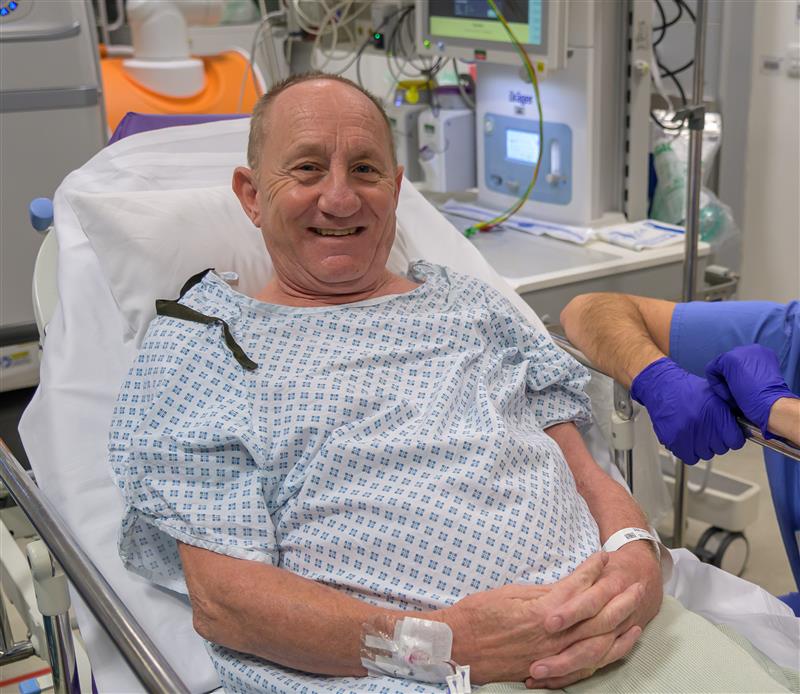
Leeds Teaching Hospitals has already treated 20 patients with the innovation. One patient to benefit from this was Paul Woodwards, 67 from Leeds.
Mr Woodwards recently underwent the procedure to treat liver cancer. The tumour in his liver was broken down using the robot-guided procedure and he was able to be home within four days with minimal discomfort. He will now be monitored for up to 10 years to see if the cancer has been successfully treated.
“I feel very lucky to have been offered this procedure. It was brilliant to be at the forefront of such a cutting-edge treatment. I was happy to be able to come home and recover within such a short space of time without needing to have a long hospital stay.”
“The staff have been absolutely wonderful, every member of the team has looked after me, checking up on me and reassuring me through my recovery afterwards. I am hopeful that other patients and families facing a cancer diagnosis will be able to benefit from this technology and to have more accurate treatments in the future.”
Epione was developed and provided by Quantum Surgical, a company specialising in robotics and AI based in Miami, Florida, and Montpellier, France.
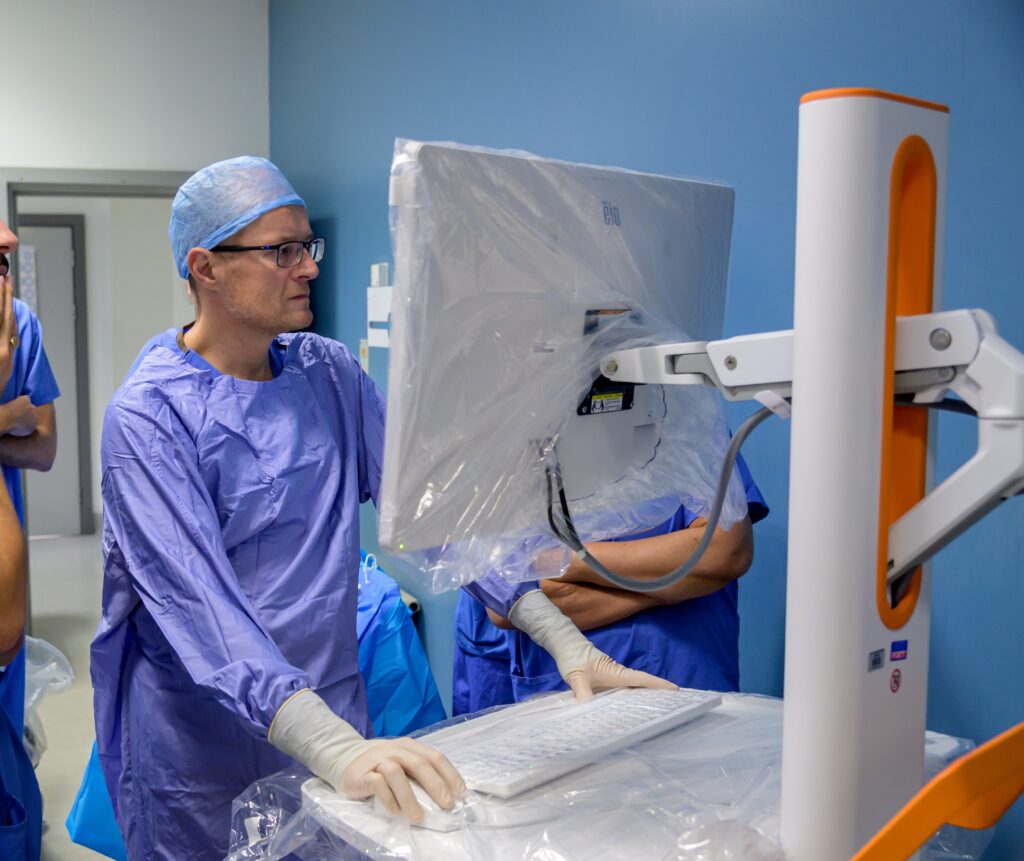
The LTH clinical team is investigating expanding Epione’s use to treat pancreatic and lung cancers in the future. This is the latest modern treatment adopted by LTH, which has led on innovation in this type of minimally invasive procedure. The Interventional Radiology team previously implemented histotripsy treatment using the Edison system by HistoSonics as part of the global-first CAIN trial, using non-invasive ultrasound to eradicate tumours.
The Trust recently unveiled its new Research and Innovation Strategy which cemented its position as a centre of excellence for research and innovation, and lays out the Trust’s aim to meet the goals of the government’s NHS 10 Year Health Plan for England.
Treatments like the Epione-guided procedure are helping LTH meet the government’s targets to harness the latest medical technology to reduce waiting times and get patients home sooner.