
Please read this leaflet carefully. It will give you information about the cancer associated blood clot (venous thromboembolism) that you have developed.
If you are living with cancer you will be aware that both the cancer and its treatment are associated with potential complications. One such complication is an increased risk of developing blood clots (also known as venous thromboembolism or VTE).
Cancer Associated Thrombosis (CAT) is the name for a DVT or PE that develops when you also have cancer. Unfortunately, VTE is common in people with cancer.
What is Venous Thromboembolism (VTE)?
There are two types of VTE:
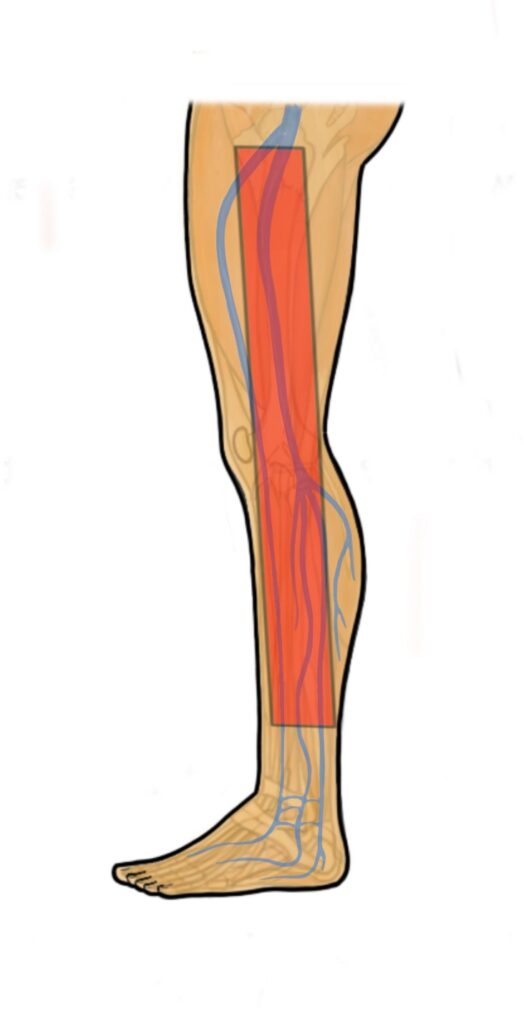
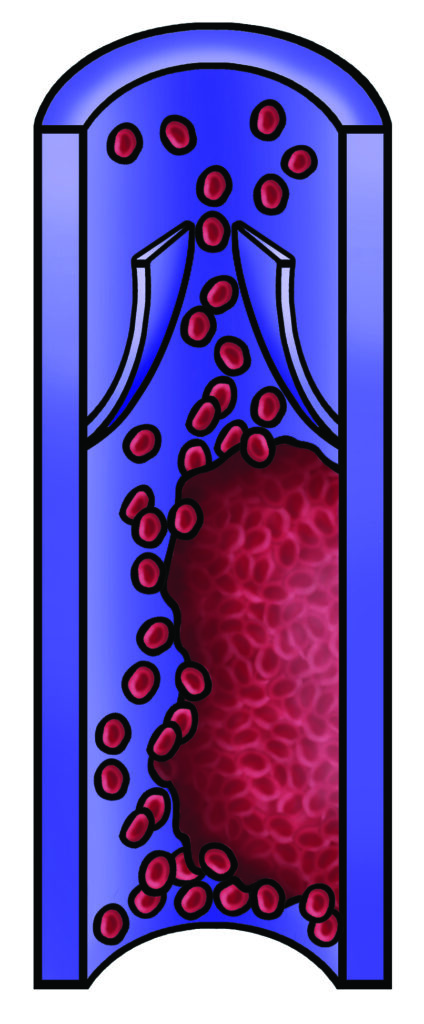
- Deep Vein Thrombosis (DVT): a DVT is a blood clot that forms in a deep vein, most commonly in your leg or pelvis.
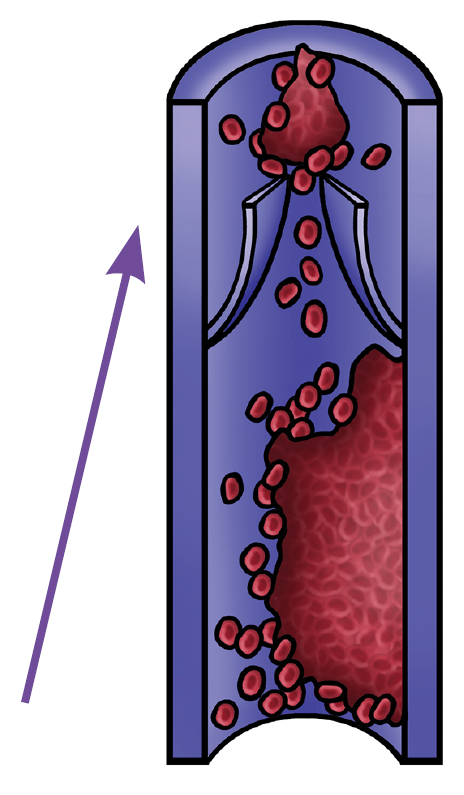
- Pulmonary Embolism (PE): if all or part of the DVT breaks free and passes through your blood vessels, it can reach your lungs. This is called a PE.
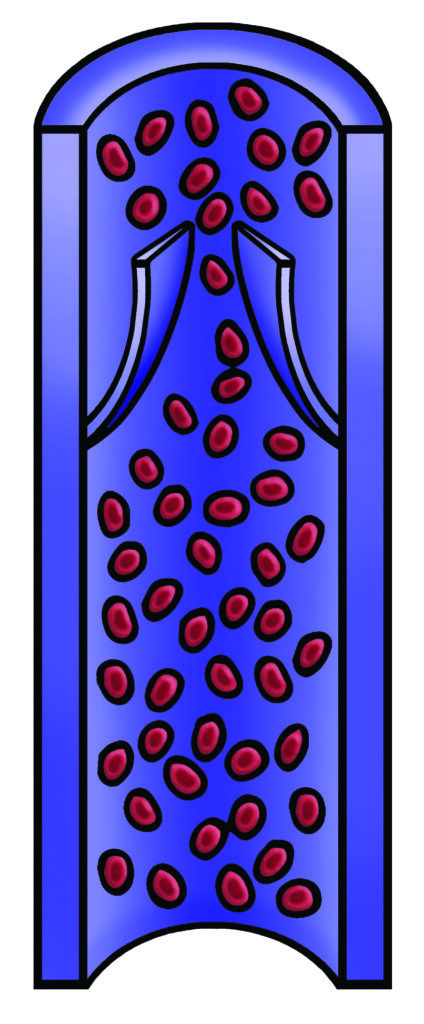
The vein in the leg
Normal blood flow
A clot has formed
Part of the clot has broken off
Signs and symptoms of VTE
DVT – Symptoms can include swelling, redness/discolouration, warmth and tenderness/pain of the legs that may be worse when standing or walking.
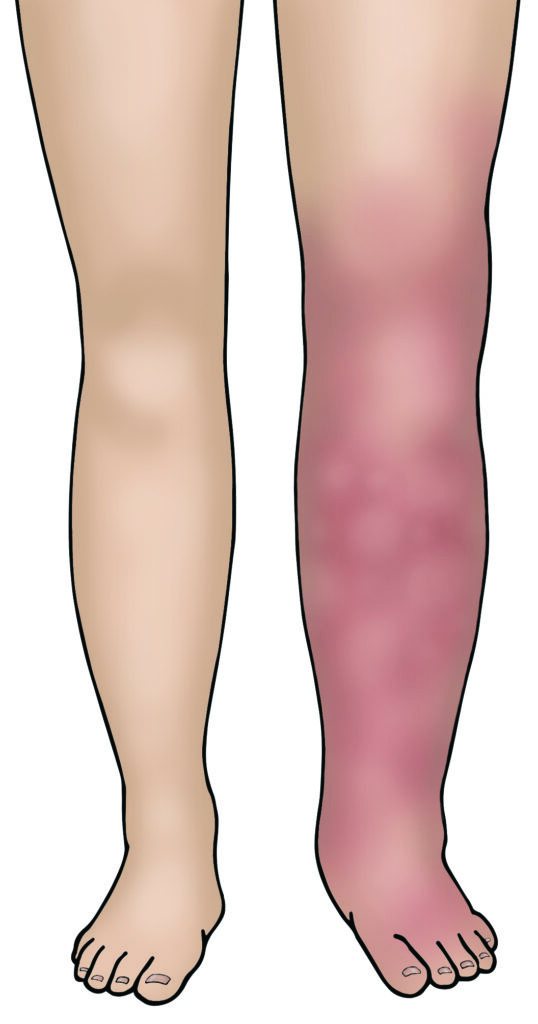
PE – Symptoms can include; chest pain/tightness (especially when breathing in), sudden unexplained breathlessness, blood stained phlegm, feeling very unwell and/or collapsing.
Call 999 or attend emergency department if you develop severe symptoms. You can also contact oncology bleep holder using the number provided at the back of this booklet.
Are VTE’s serious?
Yes VTEs are serious. DVTs can result in long term complications such as permanently swollen/discoloured legs, varicose veins and leg ulcers (known as post thrombotic syndrome). Also part or all of the DVT can break off. If this happens it will travel through your blood vessels and can reach your lungs, this is known as a PE. This is potentially life threatening.
What happens next?
You will continue to be cared for by your oncology or haematology team. They will;
- Explain your diagnosis
- Prescribe treatment
- Monitor your progress
- Review your anticoagulant treatment regularly.
What is the treatment for Cancer Associated Thrombosis?
If your doctor has confirmed that you have a cancer associated VTE, you will be advised to start anticoagulant treatment. Anticoagulants reduce blood clotting (this is sometimes referred to as “thinning the blood”).
You will either be started on:
- Low molecular weight heparin injections (LMWH) called enoxaparin;
- Or a Direct oral anticoagulant (DOAC) such as apixaban, edoxaban or rivaroxaban.
This choice will be guided by what other treatments you have going on and your preferences.
The benefits of anticoagulants are:
- They prevent the clot getting bigger so your body can gradually dissolve the clot;
- They reduce the risk of another VTE developing;
- They reduce the risk of long-term complications.
What does anticoagulant treatment involve?
Low molecular weight heparin is given as an injection under the skin at approximately the same time every day. The nurses will show you how to inject this yourself. If you are unable to inject it yourself they will try to teach a member of your family or if there is no-one else available they will arrange for the district nurses to visit you at home to inject it for you.
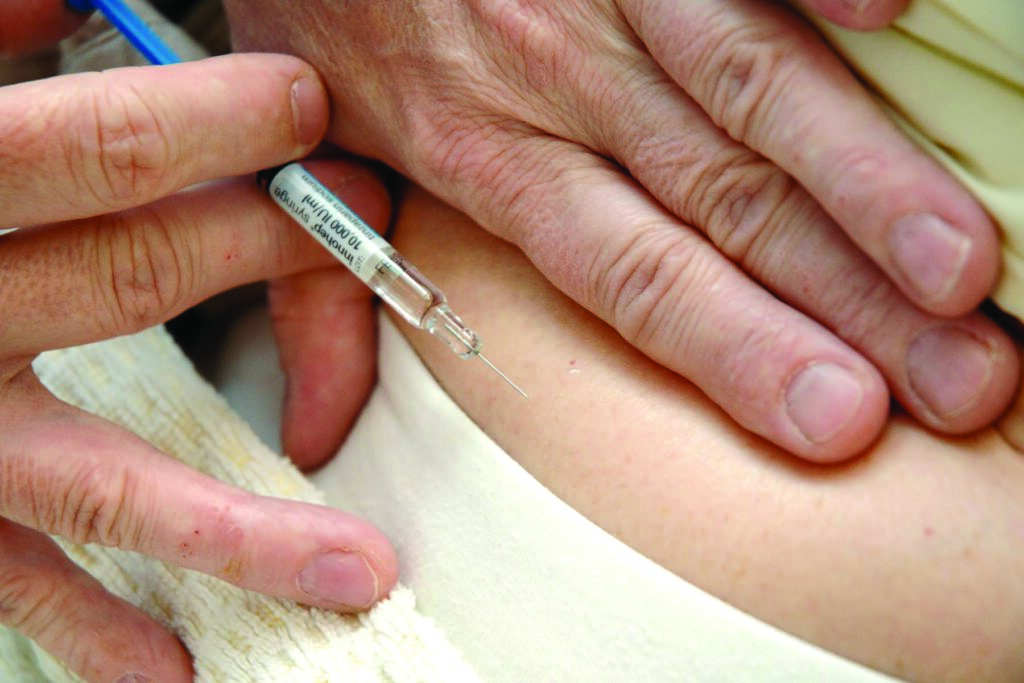
You will be given a supply of syringes which contain the heparin and advice on how to store and dispose of them. Low molecular weight heparin is derived from pork, if you have any questions or concerns about this please speak to your nurse, pharmacist or doctor. Direct Oral Anti-coagulants (DOACs) are oral anticoagulants which are usually taken once or twice a day.
Low molecular weight heparin is derived from pork, if you have any questions or concerns about this, please speak to your nurse, pharmacist or doctor.
Do the drugs have any side-effects?
The injections can lead to an increased risk of bleeding. Severe bleeding is rare but minor bruises especially at injection sites, small nose bleeds and increased menstrual flow are common. If bleeding does occur (nosebleeds, gum bleeds), and lasts for more than 10 minutes or you see blood in your urine or faeces, get a sudden severe headache or large raised bruises you should contact a nurse or doctor immediately. Some people will have an allergic reaction, usually a rash. If you notice a rash tell your doctor so the type of anticoagulant can be changed.
How long will I need to take anticoagulants for?
The usual treatment time for a cancer associated blood clot is six months but you may need to continue for longer. This depends on whether your cancer is still active and/or you are still receiving anti-cancer treatment. If you are discharged from hospital after having a blood clot check that your GP is aware of the medication that you have been sent home with and that they will continue to prescribe it for you. It is important that you continue the medication until you are reviewed at six months.
What if I miss a dose?
- Follow the specific instructions provided with your medication
- Do not take a double dose
- Contact your specialist team for advice if you miss a dose.
Can I stop taking blood thinners if feel completely fine?
No. Stopping your medications early or altering the doses without medical approval can lead to treatment failure and further blood clots.
What follow up will I receive?
You will be either referred to the VTE service for review of your thrombosis and anticoagulation six months after your clot or your oncologist will decide whether you need to continue the anticoagulation.
Am I likely to develop VTEs in the future?
Patients who have had a DVT or PE have a greater risk of developing another one in the future. It is therefore important to report signs or symptoms of DVT or PE to a doctor/nurse as soon as you notice them. Although symptoms are usually relatively sudden in onset occasionally repeated small pulmonary emboli can cause progressive breathlessness developing over time; if you are getting more breathless than would be expected for your age, level of fitness etc see your doctor.
How can I reduce my risk of developing a VTE in the future?
Avoid prolonged periods of immobility such as sitting in your chair for many hours, if you are sitting for long periods get up and walk around regularly.
- Take regular exercise, for example walk for 30 minutes a day.
- Stop smoking if you are a smoker.
- Try to maintain a weight that is appropriate for your height.
If you use hormone-based treatments such as the combined oral contraceptive pill or hormone replacement therapy (HRT), please discuss this with your healthcare professional. First degree female relatives (mother, sister, daughter) should also discuss their use of hormonal treatments with their General Practitioner.
If you are unwell and are admitted to hospital tell the doctors/nurses that you have had a DVT/PE previously. You should also inform them if you are having surgery or fracture your pelvis/lower limb and are unable to weight bear. The doctors can then prescribe some heparin injections or low dose Direct Oral Anti-coagulant (DOAC) to reduce your risk of developing a VTE.
Am I at increased risk of VTE if I go on a long distance journey?
Long journeys (more than four hours) by plane, train etc are thought to slightly increase the risk of DVT. This may be due to immobility and being cramped for long periods of time. Other factors that may play a part when flying include reduced cabin pressure and oxygen levels in the plane and slight dehydration. The increased risk of DVT from travel is small; however it is wise to try and reduce the risk.
How can I reduce my risk of VTE when travelling?
- Get up and move around as often as you can.
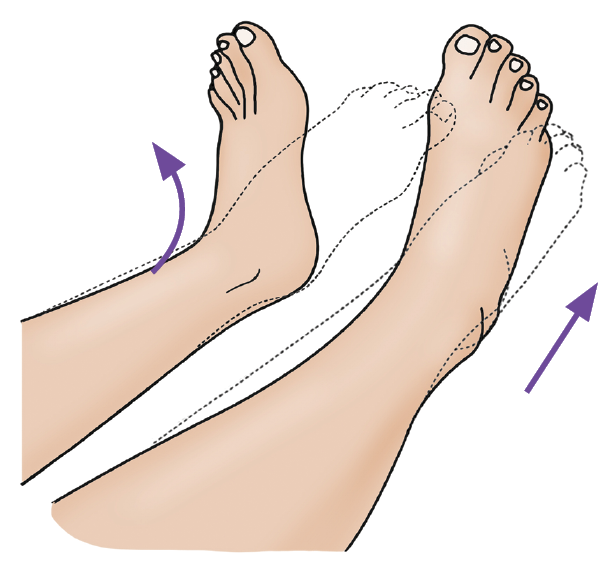
- When sitting do some gentle leg exercises, move your ankles around and go up and down on your tiptoes.
- Drink plenty of water.
- Avoid alcohol and drink tea and coffee in moderation as they can dehydrate you.
- Avoid sitting with your legs crossed and wear loose fitting clothing.
- Consider wearing anti-embolism stockings if you are travelling for more than four hours.
Where can I get more information?
- Please ask your doctor, nurse or pharmacist for more information.
- Oncology bleep holder – call 0113 243 3144 and ask for the oncology bleep holder.
- NHS website for patient information on blood clots.
- Visit www.nhs.uk/conditions/Thrombosis
- NHS 111 service – please call 111
- Visit thrombosisuk.org/ or this link more specifically to patient information about various issues thrombosisuk.org/patient-information/
- Visit www.anticoagulationeurope.org/