
Who is this information for?
You may have been advised to follow a soft, moist diet due to difficulty swallowing or following your treatment or to help recovery after surgery.
This page will provide guidance on appropriate food and drinks when a soft, moist diet is required.
This page should not be used if a Speech and Language Therapist has provided specific diet texture advice.
Back to topWhat are soft, moist foods?
Soft, moist foods are either:
- Foods which are naturally soft, e.g. banana or yogurt
- Normal foods that have been cooked or prepared in such a way that they have a soft texture, e.g. mashed potato, scrambled egg or rice pudding
A variety of foods can be softened by adding sauces, milk or gravy. Soft foods should break down into small pieces that can be chewed easily. You may need to soften some foods using a fork or food masher.
- You may receive advice from a speech and language therapist about swallowing foods of the right texture
- Advice from a dietitian can help you with your diet, to include variety and to meet your nutritional needs and preferences
- Please note that some ideas in this booklet may not be suitable for people with diabetes – please ask to speak to your diabetes nurse or a dietitian if you have any questions
Achieving a balanced diet
Everyone needs a balanced diet for good health. The next few sections contain some ideas to help you achieve a balanced soft, moist diet.
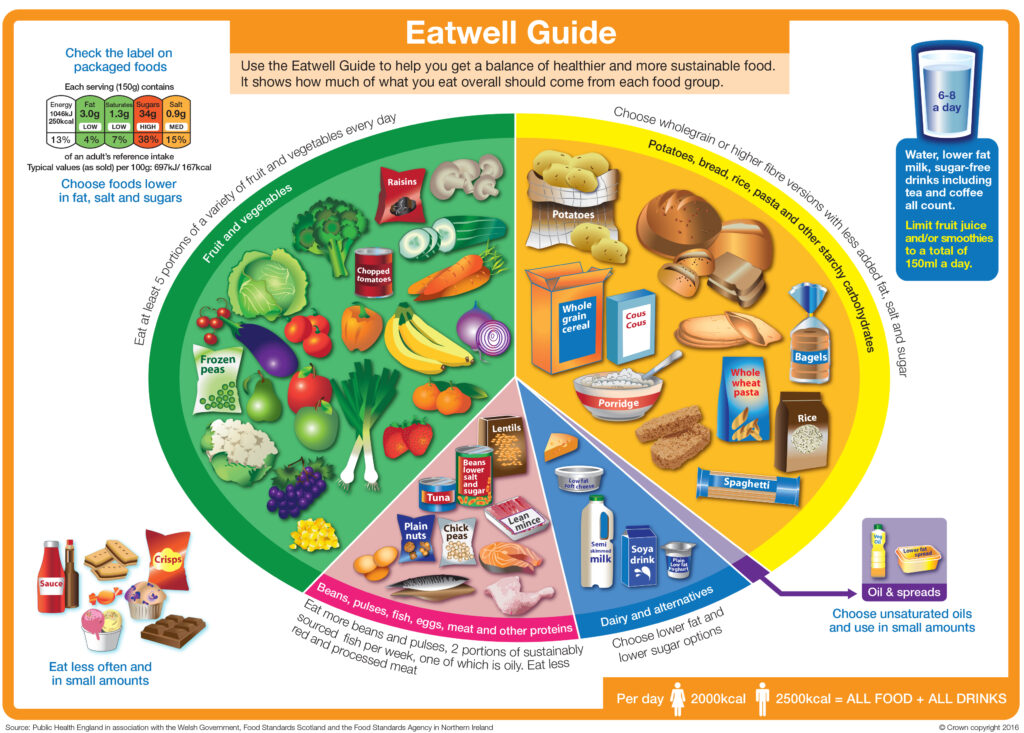
Below there are some suggestions of foods from each food group which are suitable to eat when following a soft, moist diet.
Back to topBread, rice, potatoes, pasta and other starchy foods
These foods provide us with energy and B vitamins. Try to include these at each meal.
| Choose | Avoid |
| • Porridge, Weetabix or breakfast cereals that soften with plenty of milk • Mashed potato/sweet potato • Jacket potato (no skin) with plenty of butter or moist filling e.g. Grated cheese , cottage cheese, tuna with mayonnaise, baked beans • Pasta, noodles or rice with plenty of smooth sauce • Polenta, couscous, quinoa • Yorkshire puddings softened with plenty of gravy • Pancakes • Soft hot buttered toast without crusts • Lightly toasted buttered bagel, crumpet, pikelet • Crackers, crisp-breads, breadsticks chewed well – eaten with cream cheese, houmous, creamy dip • Bite and dissolve crisps e.g. corn puffs, Quavers®, Skips® • Plain cake softened with custard | • Granola, muesli, All Bran • Potato skins, hard or oven chips • Deep pan pizza and pizza crusts • Popcorn • Potato crisps Some people find bread difficult to swallow. This is because it can absorb fluid, swell and may feel like it is sticking. |
Meat, fish, eggs, beans and alternatives
These foods are a good source of protein which helps with the healing process. Try to include at least three times per day.
| Choose | Avoid |
| • Minced chicken, beef, pork, lamb, turkey and soya/ vegetarian products served with gravy or smooth sauce • Slow cooked stew or casserole. Ensure meat is very tender • Corned beef • Meat loaf, meatballs, burger patty or skinless sausages served with gravy or smooth sauce • Potted meat or meat paste • Deli soft sliced meats (e.g. wafer thin ham, chicken, turkey) • Pate • Soft cooked beans or lentils • Dips such as houmous, guacamole, tzatziki or taramasalata • Smooth nut butters • Eggs can be eaten if soft boiled, poached, fried, scrambled or in omelette • Fresh or tinned fish without bones in smooth sauce | • Roast meats, steak, chops or tough cuts • Dried or cured meat • Crusty pastry • Nuts and seeds • Hard boiled eggs |
Milk and Dairy foods
These foods provide an important source of protein and calcium to help keep your bones strong. Try to have three servings per day. Choose full fat options where possible.
| Choose | Avoid |
| • Milk and milk puddings • Fortified dairy free milk alternatives, e.g. Oat milk , soya milk, coconut milk • Melted or grated cheese • Cottage cheese • Yogurts or fromage frais • Evaporated milk • Ice cream • Custard or egg custard (no pastry) • Rice pudding, tapioca, sago, semolina | • Foods that may be difficult to swallow or cause discomfort However, most diary foods are soft and moist and are therefore suitable to have |
Fruit and vegetables
These foods provide essential vitamins, minerals and fibre. Aim to have five portions per day. Ensure firm varieties of fruits and vegetables are well cooked or stewed and serve with sauce, cream or custard to add extra nutrition.
| Choose | Avoid |
| • Banana, mango, melon, berries, plums • Stewed apple, pears, apricot, • Tinned peaches, pears, mandarins • Fruit juices (100ml portion to be sipped slowly) • Well-cooked, mashed carrots, parsnips, butternut squash, pumpkin, turnip/swede • Chopped, tinned tomatoes • Cooked spinach, courgettes, aubergines • Avocado • Well-cooked cauliflower, broccoli with stalks cut short • Mushy peas, baked beans, soft pulses | • Pith e.g. oranges and grapefruit • Skins e.g. grapes • Stalks • Pips and seeds • Stringy vegetables, e.g. celery, green beans, asparagus • Sweetcorn, peas, mushrooms • Raw vegetables such as onion, peppers, carrots • Dried fruit • Fruits such as raw apple, pineapple |
To make vegetables soft they need to be well-cooked. This means a lot of the nutrients are lost in the cooking water. Use the cooking water to make gravy, stocks or sauces. You may wish to discuss with your dietitian about taking a multi-vitamin.
Back to topSauces, dressings and dips
There are many varieties of prepared sauces in tins, jars or packets. Soups, especially if condensed, make good sauces, eg cream of chicken or cream of mushroom. The following sauces can be added to foods to improve texture, flavour and energy content:
- Gravy
- Parsley sauce
- Curry sauce
- Mayonnaise
- Salad dressings
- Sour cream
- Tomato ketchup
- Guacamole
- White sauce
- Cheese sauce
- Sweet and sour sauce
- Salad cream
- Dips, eg cheese and chive
- Houmous
- Brown Sauce
Enriching your foods
If you find you are not eating well, or are losing weight unintentionally, these ideas will help increase the energy and protein in your diet without increasing portion size. Try adding the following:
Where possible choose full-fat products.
| Food | Add |
| Breakfast cereals | Sugar/honey/syrup Cream Full fat milk Evaporated/condensed milk |
| Vegetables and mashed potatoes | Cream Butter/margarine Grated or cream cheese Creamy sauce, eg white sauce or cheese sauce Olive oil |
| Soups | Cream Grated or cream cheese Dried milk powder Full fat milk Mashed potato already enriched Smooth peanut butter Jar of meat paste |
| Savoury dishes e.g. curry, shepherd’s pie, fish pie, etc. | Cream Full-fat yogurt Grated or cream cheese |
| Milk based sauces and dressings | Cream Full-fat natural yogurt Grated or cream cheese |
| Puddings | Cream Custard Ice cream Honey/syrup Evaporated/condensed milk |
Nourishing drinks and snacks
Nourishing drinks and snacks can also be useful to increase your energy intake if you have lost weight or have a poor appetite. Here are some suggestions:
- Hot milky drinks, eg Horlicks, Ovaltine, hot chocolate, milky coffee
- Full fat milk or cold milkshakes with added ice cream or flavouring, eg Nesquik powder or Crusha syrup* Try fortifying your full fat milk by adding additional milk powder, such as Marvel or supermarket own brand milk powder. Add 3-4 tablespoons per pint of milk.
- Instant soups made with milk instead of water
- Biscuits soaked in milk, tea or coffee
- Chocolate (without nuts or fruit)
- Smoothies (no bits or seeds)
- Breakfast cereals soaked in full fat milk
- Ice cream
- Mousse, blancmange, instant whips
- Trifle
- Jelly, milk jelly
- Full fat yogurt
- Custard
- Milk puddings, eg rice, semolina, tapioca pudding
- Egg custard (without pastry)
- Crème caramel
- Sponge pudding with custard
- Mashed banana with custard
Chemists and supermarkets sell supplemented milkshakes or soups such as Complan and Meritene. These drinks can be used in between meals or at bedtime. They are available in a variety of sweet and savoury flavours and can be made up with milk. Nutritional supplement drinks are also available on prescription. Ask your dietitian or doctor for more information.
Back to topPractical tips for a small appetite
- Try smaller, more frequent meals/snacks every 2-3 hours
- Drink fluids after a meal rather than just before as they may fill you up
- Relax before meal times and take your time while eating
- Some people find getting some fresh air before mealtimes can help to stimulate appetite
- If you are finding meal preparation difficult consider stocking up on store cupboard staples, e.g. cereal, tinned items, high calorie spreads, such as peanut butter, chocolate spread or jam
- In order to save time and energy, food can be cooked in larger amounts and then frozen
- Ready meals that are frozen, chilled or tinned take less effort to prepare
- Some commercial food delivery companies provide soft meals. You can look online or ask your dietitian for details
Baby foods are not advised, as they do not meet the nutritional needs of adults.
Back to topExample menu plan
Breakfast
Full fat milk or fruit juice.
Ready Brek, Weetabix or porridge made with full fat milk, Crustless bread and butter and scrambled egg made with full fat milk and butter.
Mid morning
Milky drink made with full fat milk, e.g. Ovaltine, Horlicks, hot chocolate, coffee.
Full fat yogurt.
Lunch
Bolognese with grated cheese on top or shepherd’s pie with mashed vegetables.
Crème caramel, custard or mashed banana with cream/custard.
Mid afternoon
Milky drink made with full fat milk, e.g. Ovaltine, Horlicks, hot chocolate, coffee.
Stewed fruit with cream.
Evening meal
Corned beef hash with mashed vegetables or boil in the bag fish in sauce with mashed potatoes and mashed vegetables.
Rice pudding with seedless jam or sponge pudding with cream/custard.
Supper
Milky drink made with full fat milk, e.g. Ovaltine, Horlicks, hot chocolate, coffee.
Ready Brek, Weetabix or porridge made with full fat milk, or soft bread roll with seedless jam or smooth peanut butter.
If you have any suggestions or comments regarding this page please let your dietitian know.
Back to top