
Genetic testing for FAP
Information for patients
View or download this information as a PDFWhat is FAP?
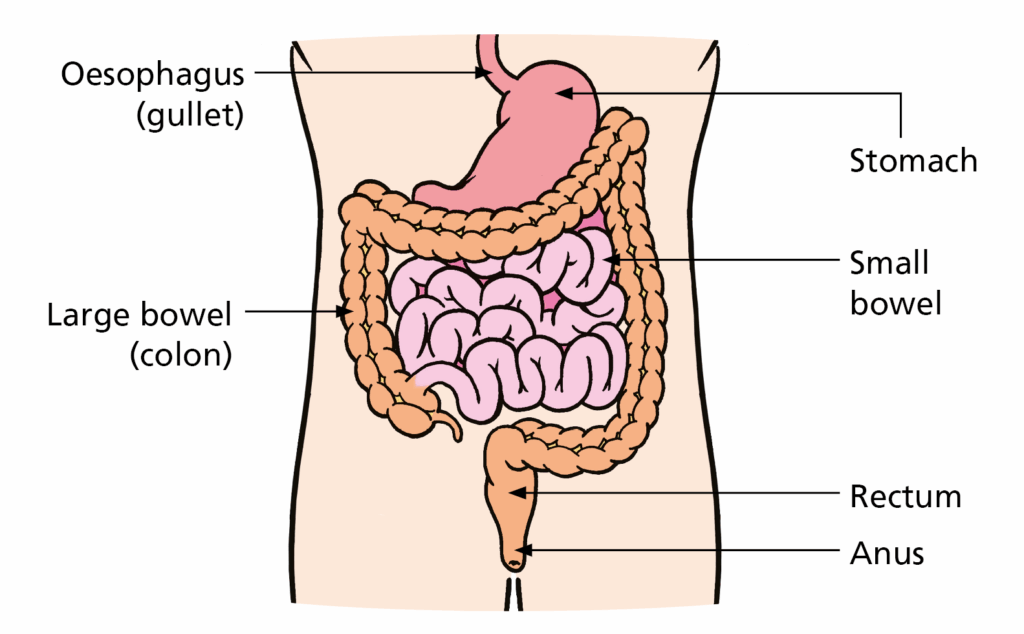
FAP (Familial Adenomatous Polyposis) is a rare inherited bowel condition which can cause hundreds of polyps (adenomas) to develop in the bowel, especially in the large bowel (colon and rectum).
Most people who have FAP begin to develop bowel polyps in their early teens. In some families, the polyps do not develop until older ages and may not be as numerous. Most people with FAP will eventually develop bowel (colorectal) cancer if they do not receive treatment.
People with FAP may develop polyps in the stomach or small bowel. FAP can also cause skin cysts and harmless bumps on the bones (osteomas). A small number of people with FAP develop desmoid tumours in the abdomen. Desmoid tumours are benign (non-cancerous) but can cause pain and obstruction.
People with FAP may develop small black dots at the back of the eye called CHRPEs (Congenital Hypertrophy of the Retinal Pigment Epithelium). CHRPEs do not affect vision in any way and can occur in people who do not have FAP.
The chance of developing certain types of thyroid cancer may be increased in FAP. We do not recommend regular screening but it is important to see the GP if you notice any growing lumps at the front of the neck.
Genes and FAP
FAP is caused by a change in the APC gene. Genes are coded messages which give instructions for how cells grow and function. Genes come in pairs; we inherit one copy from each parent. In some people with FAP, the change in the APC gene has been inherited. In other people, neither parent has FAP suggesting the gene change occurred for the first time in the affected person.

If someone has a change in one copy of the APC gene, they will have one working copy of the gene as well. Only one copy of each gene pair is passed on to a child; therefore, if someone carries a change in one of their copies of the gene, each child has a 50% chance of inheriting this copy and being affected with FAP.
Who can have genetic testing for FAP?
Genetic testing is available for some families. This initially requires a blood sample from someone in the family who has bowel polyps, bowel cancer or another feature of FAP. This is sometimes called a ‘mutation search’ test. If a gene change is identified, this can confirm the diagnosis of FAP. In some families, no genetic testing is possible, or no causative gene change is identified, but bowel screening may still be arranged.
If a gene change is identified in one person in the family who has features of FAP, this can enable genetic testing of other family members to determine whether or not they carry the same gene change. This is called ‘predictive testing’. If someone has a predictive test and is shown to carry the gene change, he / she has FAP and each of his / her children will have a 50% chance of inheriting FAP.
People in the family who have not inherited the gene change are not at risk of FAP and cannot pass this on to their children.
We offer predictive testing from the age of 10 years onwards, as children can be involved in the discussion around testing and this is close to the age when bowel screening should start. Testing in pregnancy and other reproductive options are available.
Options for people with FAP
If you have FAP, appropriate screening will be discussed with you and we will help to arrange this for you. Your doctor or genetic counsellor will discuss if anyone else in your family needs screening and options for risk reducing surgery, if appropriate.
If a person has FAP, they can have screening of their large bowel to monitor for polyp development. This will usually be recommended to start between 12 – 14 years of age. Most people with FAP will have surgery to remove the large bowel when a large number of polyps develop, to reduce the risk of cancer. This surgery is usually recommended by the late teens or early 20’s. From the age of 25 years, people with FAP should have screening of the stomach and upper small bowel to detect polyps.
In some families, there is a milder form of FAP where fewer polyps develop at older ages. In this milder form, screening may be recommended to start from a slightly later age and risk reducing surgery may not always be required.
For more information contact
Department of Clinical Genetics
Chapel Allerton Hospital, Chapeltown Road, Leeds LS7 4SA
Telephone: (0113) 392 4432
Other sources of information
Macmillan Cancer Support
Tel: 0808 808 0000
FAP Gene Support Group
Polyposis Patient support group
Factual information presented in this leaflet is based on accurate contemporaneous peer reviewed literature. Evidence of sources can be provided on request.