
Humans are usually born with 46 chromosomes, which are arranged in 23 pairs. One of each pair of chromosomes comes from our mother in the egg and the other of the pair comes from our father in the sperm.
The chromosomes are numbered from 1 to 22 and the last pair, known as X and Y, are the sex chromosomes as they determine whether the person is biologically a boy or a girl. Boys usually, but not always, have the sex chromosomes XY and girls usually, but not always, have the sex chromosomes XX.
Occasionally, a girl is born with only one X chromosome in each cell; this is known as Turner Syndrome. The picture below shows the chromosome pattern of someone with Turner syndrome
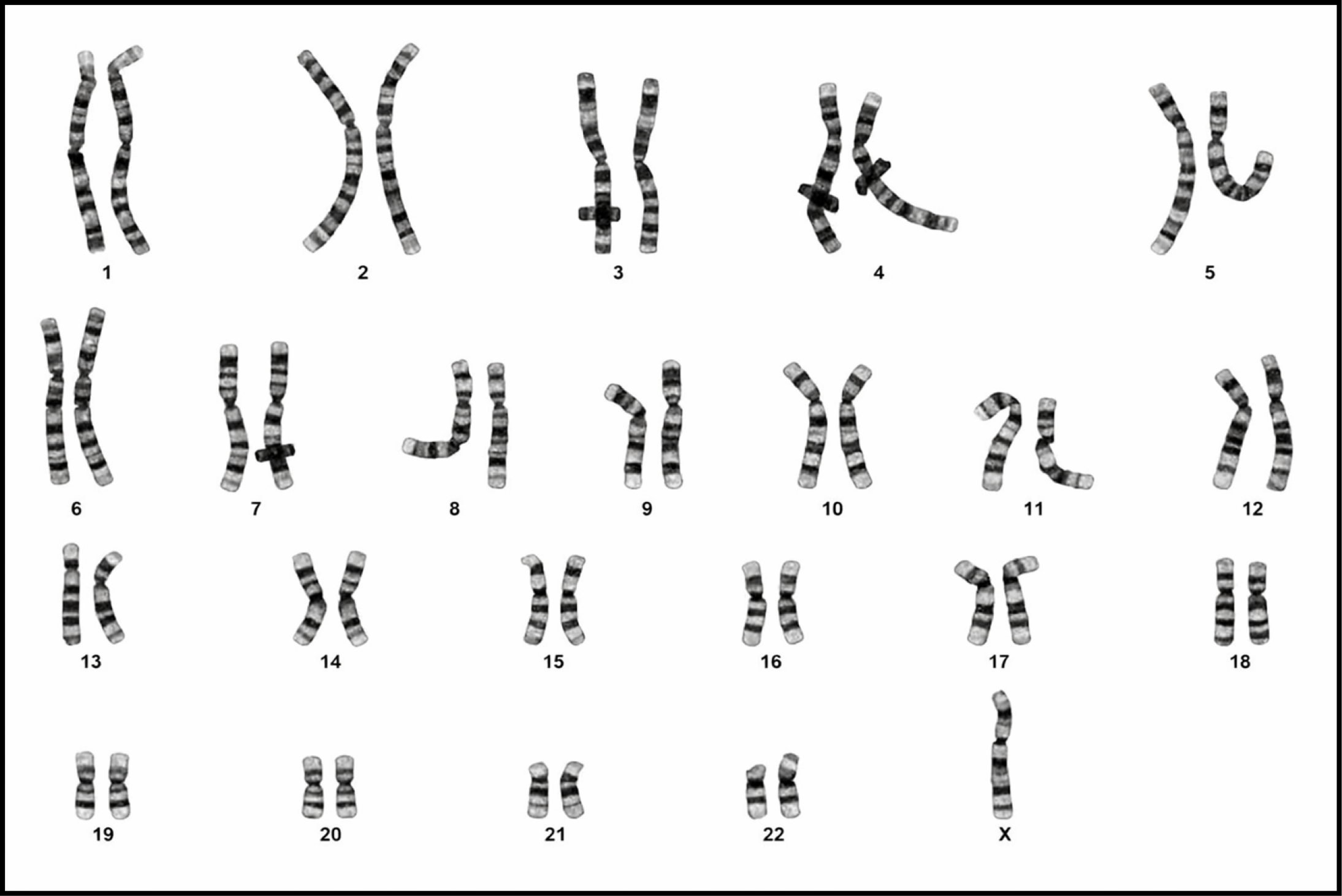
Turner Syndrome can also be caused when part, but not all, of one of the X chromosomes is missing.
About 1 in 2,500 girls has Turner Syndrome. In Britain, it is estimated that there are about 10,000 girls and women who have Turner Syndrome. These girls are female as they do not have a Y chromosome.
Mosaic Turner Syndrome
In about half of the cases of Turner Syndrome, one X chromosome is missing from or is changed in some, but not all, of the cells of the body. This is referred to as “Mosaic Turner Syndrome”. Girls with Turner Syndrome in a mosaic form often have fewer features of Turner Syndrome and are more likely to enter puberty naturally.
What causes Turner syndrome?
Turner syndrome occurs when there is loss or alteration of an X chromosome during the making of sperm or eggs, or in the
early developing embryo. It is not known why this happens. No risk factors, such as raised maternal age, diet during pregnancy etc. have been identified as being associated with an increased risk of having a baby with Turner Syndrome. Turner Syndrome is not usually inherited.
When is the diagnosis made?
Turner Syndrome can be suspected because of features seen on an ultrasound scan performed during pregnancy. A CVS (chorionic villus sample) or amniocentesis test can confirm a diagnosis. Turner Syndrome may be suspected shortly after birth because a baby has an unusually wide neck (“neck webbing”), puffy hands and feet, or, occasionally, a problem with the heart.
Often, Turner Syndrome is not diagnosed until early childhood when tests may be carried out because a girl is not growing as expected. Some girls are diagnosed as teenagers when they are taken to the doctor because their periods or puberty are not starting.
A diagnosis of Turner Syndrome is confirmed through genetic testing by a blood test.
Features of Turner Syndrome
Turner Syndrome can affect many parts of the body. It is variable between individuals.Most girls with Turner Syndrome would have some but not all of the following:
- short stature (not as tall as other girls);
- widening of the neck (“webbing”);
- have underdeveloped ovaries, resulting in a lack of monthly periods and infertility;a broad chest with widely spaced nipples;
- a heart murmur, sometimes associated with narrowing of the aorta (the main blood vessel that comes out of the heart);
- kidney problems – horseshoe kidneys;
- thyroid problems – under activity of the thyroid; and
- hearing problems and ear infections
Girls and women with Turner Syndrome will need have their heart, kidneys and reproductive system checked regularly throughout their lives. Whilst there is no cure for Turner Syndrome, with regular monitoring and appropriate treatment, it is usually possible to lead a relatively normal and healthy life.
Support for people with Turner Syndrome
As well as the support of medical professionals who will help you stay healthy and arrange relevant investigations and treatment, there are several support groups available such as the Turner Syndrome Support Society.
For more information:
If you need more information, please contact your local Genetics Department. If you live in the Yorkshire region, please contact: