

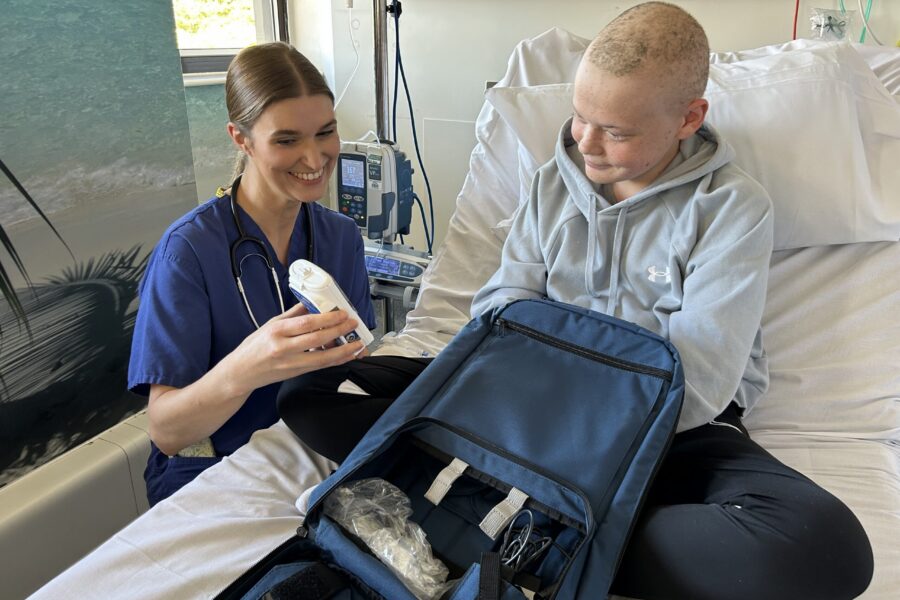
Our Ambulatory Chemotherapy Service provides treatments including chemotherapy and fluids through a mobile device called a Computerised Ambulatory Delivery Device or CADD pump. This means that a patient does not need to stay in hospital overnight and can either go home or to nearby accommodation.
Read our patient information leaflet hereWho can have ambulatory care?
Currently there are only a select few paediatric chemotherapy cycles that are suitable for ambulatory care. Specific criteria must be met in order to be eligible for ambulatory care.
A patient’s consultant must agree that ambulatory care is suitable, and they will check that the patient meets the eligibility criteria.
To stay at home during a treatment cycle a patient must:
- Live within one hour travel time of Leeds Children’s hospital (Clarendon Wing – Leeds General Infirmary site)
- Have a parent or carer who is able to drive them to the hospital day or night
- Be contactable at any time
- Be able to take oral or NG/PEG medications and meet any fluid targets as advised by the AC team
- Perform urine tests as instructed
If any of these do not apply to a patient they may not be suitable for ambulatory chemotherapy.
If a patient does not live within one hour of Leeds children’s hospital, then local hotel accommodation and parking can be provided by the Ambulatory Chemotherapy service. Please speak to a member of the team for more details.
What are the advantages of ambulatory care?
- The patient is able to stay at home or in other comfortable accommodation for the duration of the treatment cycle, whilst attending hospital daily for nursing and medical care.
- AC is a day-case service which operates through the Children’s Haematology and Oncology Day Unit. Treatment will be scheduled between 8am and 6pm. Patient’s will only need to attend hospital for a few hours each day, depending on the chemotherapy regimen.
- Outside the hospital treatment will be administered through a small portable pump called a CADD pump. This will be carried in a specially designed rucksack which will hold the medication/fluids, pump and the charger so patient’s can carry on their daily life.
- Away from the hospital patients benefit from increased independence, privacy, better rest and fewer interruptions.
- Parents, carers and siblings can remain with the patient at all times.
What do our patients say?
17 year old Oscar was one of the first patients at Leeds to receive Ambulatory Chemo therapy.

‘When I’m at home I can sleep better, it’s not noisy like in hospital, I can have friends and family over to see me more easily, I can see Toby (Oscar’s dog) and I can use my computer…
…Chemo leaves you with a heightened sense of smell and certain smells can make you feel really sick. For me this was hospital food so being able to eat at home makes a huge difference’
17-year-old patient Oscar
First visit to Ambulatory Care Unit (ACU)
A patient’s first visit to ACU will involve having a pre-chemotherapy assessment and consent conversation with the medical team, pre-chemotherapy blood tests and observations. The team will also provide information about AC and your pump.
Patients will be seen by a member of the pharmacy team who will provide them with an anti-sickness medication regime to minimise side effects of the chemotherapy.
Parents and carers will be be given contact information for the team in the hospital team in case they questions or concerns during their ambulatory chemotherapy.
What happens during ACU opening hours (Day time: 8 am – 6pm)
A typical day on the Paediatric Ambulatory Care Unit
During a cycle of ambulatory care patients will typically visit the hospital every day. A typical visit looks like this:
- Patients will receive specific treatment times/appointments to attend each day
- Height, weight and observations will be taken on arrival
- Any required blood tests will be taken from the patient’s central line
- Patients will talk to the AC team about any symptoms they are having
- Appointments with other members of the multi-disciplinary team may be scheduled e.g. physiotherapy
- Other tests or treatments as necessary e.g. photobiomodulation (red light therapy) for mucositis
- Patient will have their prescribed chemotherapy treatment, and if required, intravenous hydration fluids
- Patients will be seen by an ambulatory clinical specialist nurse and/or doctor each day
Follow up care
Ambulatory care nurses will contact parents/cares to inform them of any appointments or follow-ups after a patient is discharged from AC. A patient’s GP will also receive information regarding the treatment a patient has had.
Meet the AC Team
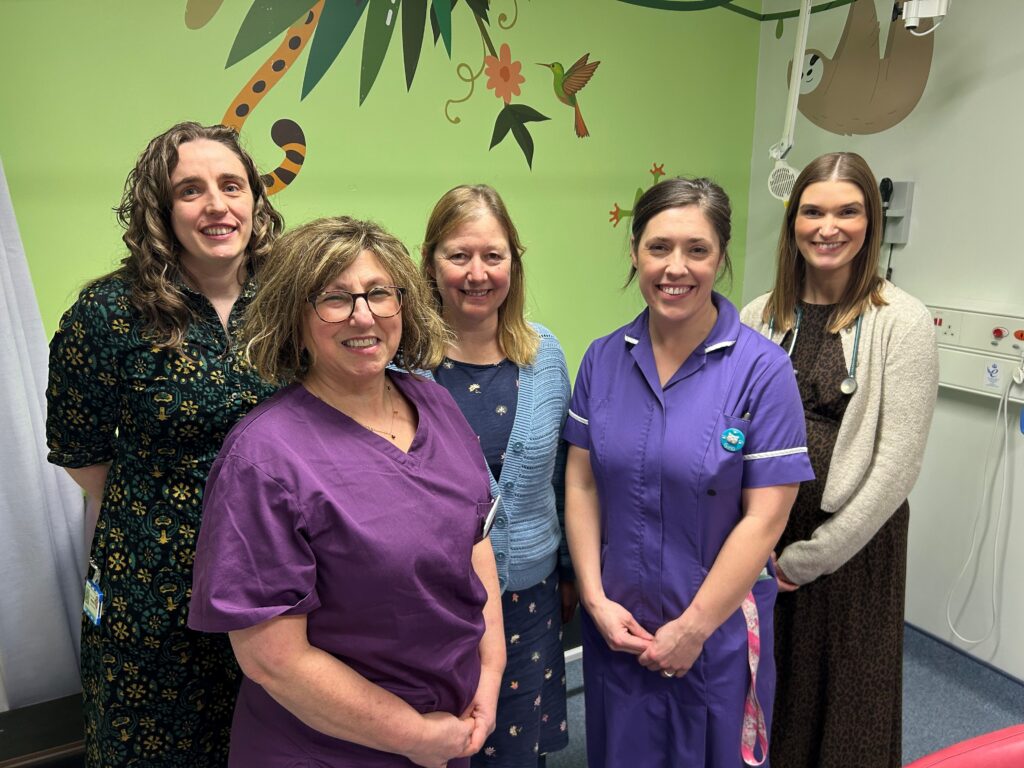
The AC team is made up of various specialist roles including Consultants, Pharmacists and Clinical Nurse Specialists.
Contact information
8am-6pm Monday – Friday
Telephone the AC Team: 0113 3920793
Telephone the Children’s Haematology and Oncology Day Unit: 0113 3927379
6pm – 8 am, weekends and bank holidays
Telephone Children’s Oncology Ward L31: 0113 3927431