
Caring for someone with dementia at home during COVID-19
This pack has been put together by Leeds & York Partnership NHS Foundation Trust with some suggestions that might help you and the person you care for cope with this difficult time. There are some ideas about how to look after yourself, how to respond to any changes in the behaviour of the person you care for as well as information about where to seek additional practical and emotional support.
View a Resource pack for carersThis is me
This is me is a form that helps health and social care professionals build a better understanding of who the person really is, which can help them deliver care that is tailored to the person’s needs. This is me should be completed as early as possible, so the person can take it to a new place or give it to new people who contribute to their care. It should be updated as necessary. This is me should be filled in by the individual(s) who know the person best and, wherever possible, with the person involved.
Download a this is me formKnow Who I am
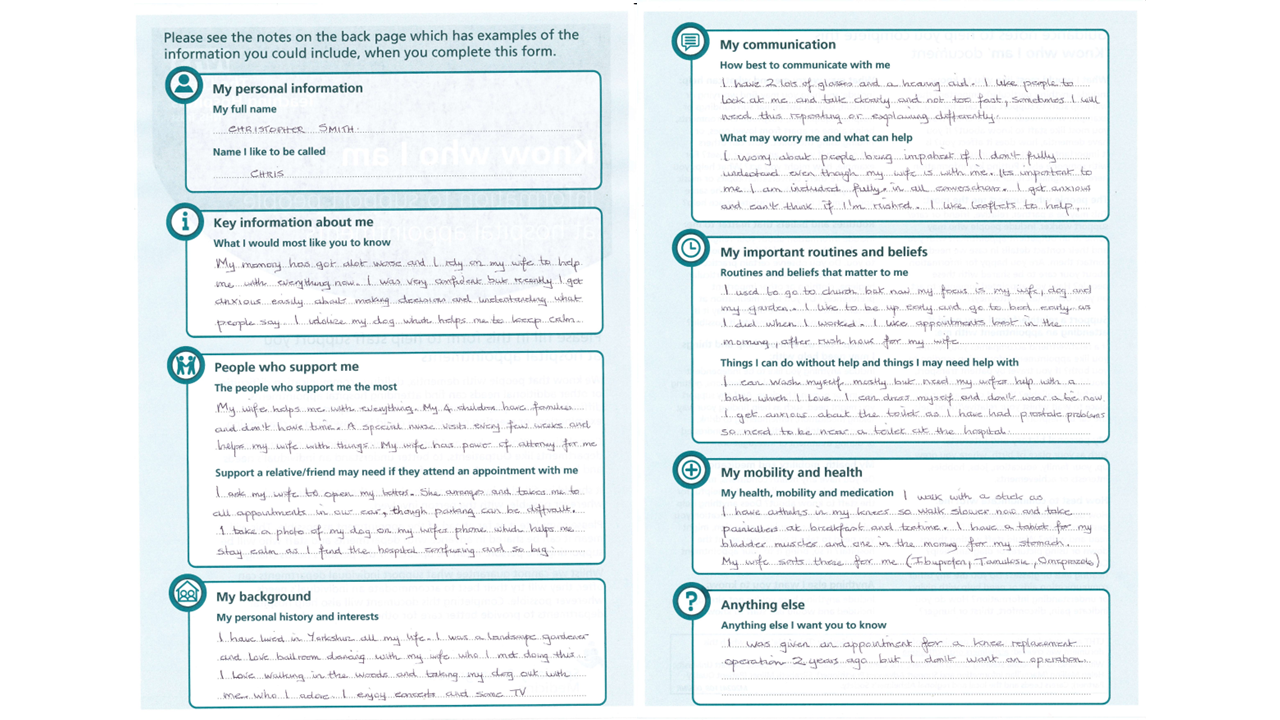
We have recently developed a new document called The Know Who I am for people who are coming to Hospital Appointments. The Know Who I am document is for use by people that are coming to appointments e.g. in Out-patients with Delirium, significant memory loss, Dementia, other communication difficulties and additional needs (not LD and autism) because we know that people can find this unsettling and challenging. The document has been consulted on widely including with people who are living with these conditions and their family/carers.
It should be completed by someone who knows the person best with the person involved where possible. Completion of the document will help us understand your individual needs and help us understand the best way to support and care for you in these areas. The document should be saved to PPM (our electronic patient system) or equivalent and the physical document returned to you.
Staff will only use the information you have provided to support and care for you during the appointments This information can be updated at any point. Please do not provide information that you would worry about other people knowing.
Download Know Who I am formWe have also included an example of what you might write in one (click on image to enlarge)
Free Dementia Training Resources
The Leeds Beckett Centre for Dementia Research team have created a number of resources for those working in health and social care services, volunteers, family members and members of the public. They provide basic, quality assured training, on key dementia topics.
If there are any training topics that would be helpful, please get in touch with the team by emailing: [email protected].
Join Dementia Research
We are encouraging all staff, patients, family and friends to Join Dementia Research.
Every 3 minutes someone in the UK develops dementia and it now affects 850,000 people with the number set to double over the next 30 years*.
The Department of Health have launched the Challenge on Dementia 2020 with the aim of making England the world-leader in dementia care, research and awareness.
The main objectives are;
- Every newly diagnosed person will receive information on Join Dementia Research
- All relevant staff can signpost patients to Join Dementia Research
Through research we can help to understand what causes the disease, develop effective treatments, improve care and hopefully one day find a cure.
“Research will be how we answer all of our prayers for a world without dementia”
Simon Denegri OBE, NIHR National Director for Patients, Carers and the Public, National Institute for Health Research.
We need your help!
All it takes is 5 minutes – the time it’s taken you to read this article.
Register your interestFind the studies that match your information, Connect with researchers to show an interest in their studies, Discover exciting new studies. Help us improve dementia care and treatment.
If you are a member of staff, please watch the video and learn more about promoting this research to your patients.
Watch the video and complete the quizWhat types of research could I take part in?
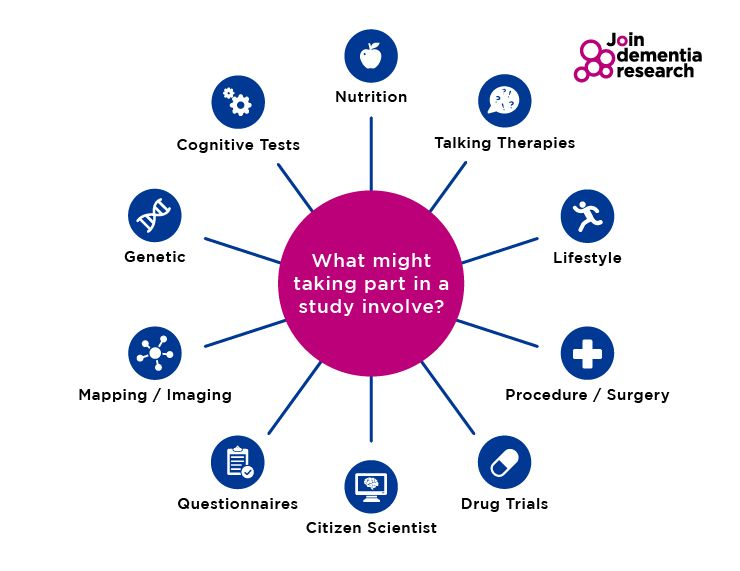
Taking part in a research study can take many forms. There are lots of types of studies, such as those looking at prevention or new ways to diagnose the condition; drug studies trialling new treatments; or surveys aiming to improve the quality of life for people with dementia and their carers.
Handmade for Dementia
Handmade for Dementia kindly donate cannula sleeves for our patients. The knitted sleeves improve the patient’s experience while in hospital by giving them something to fiddle with, this can help with anxiety and also reduces the chance of them removing important cannulas in their arms.
If you’d like to get involved in making them you can join the Facebook group.
Patient information leaflets