
Meeting Your Doctor
Before treatment starts, you’ll have a chat with your doctor. They will explain the treatment, possible side effects, and ask you to sign a consent form. This meeting can be in person or over the phone.
Planning Scan
Before treatment begins, you’ll have a planning scan. This usually takes place a few weeks before treatment. You will be laid down in the treatment position and will have a CT scan to locate the tumour and the area which will be treated.
Radiotherapy
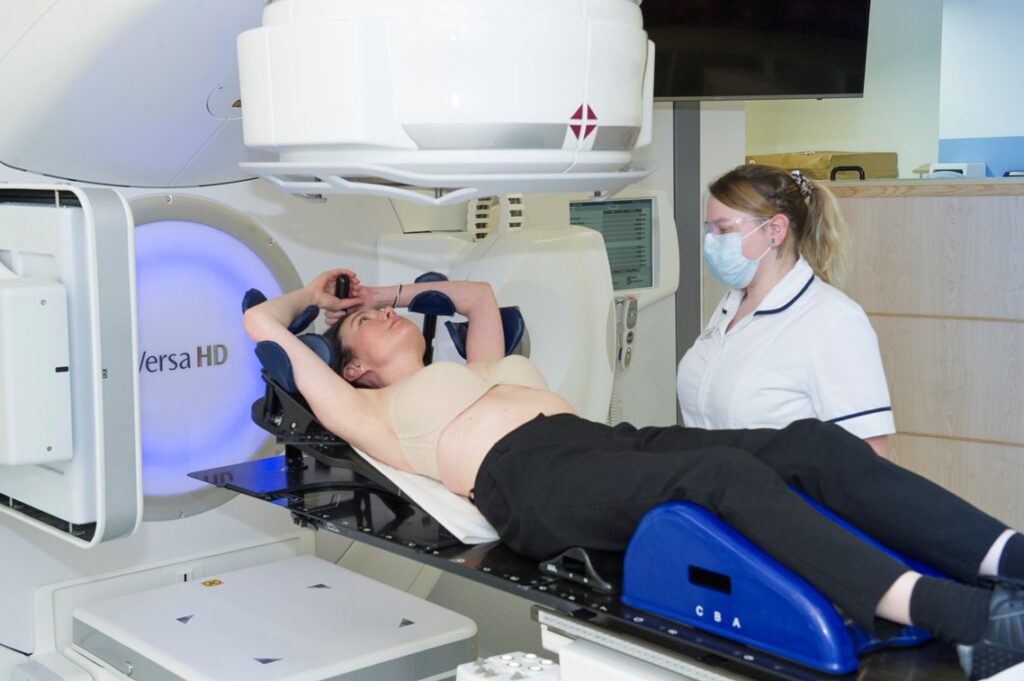
Radiotherapy for breast cancer is usually given 5 days a week (Monday to Friday). The number of treatments will depend on the doctor’s recommendation. The therapeutic radiographers will accurately position you on the treatment couch. This will be the same position which you laid down in for your planning CT scan.
The linear accelerator will rotate around you and deliver the radiotherapy treatment. You won’t feel the radiation, but you might hear some noises as the machine operates. Each session typically takes around 10 to 15 minutes. However, the actual radiation exposure lasts only a few minutes. You’ll need to stay still during the treatment, but you won’t feel pain or discomfort during the process.
Voluntary Deep Inspiration Breath Hold (vDIBH)
vDIBH is a technique used in radiotherapy where you hold your breath for 20-25 seconds during treatment. By taking a deep breath and holding it, your heart moves away from the chest wall, which helps protect it from radiation. However, because everyone’s body is different, not everyone experiences the same benefit from this. Please see the resource below to the RESPIRE video advising you on breath-holding techniques.
An introduction to radiotherapy for breast cancer leaflet RESPIRE Project VideoSurface Guided Radiotherapy (SGRT)
Surface Guided Radiotherapy (SGRT) is a special technology used in radiotherapy to make sure you are in the right position during treatment.
It monitors the surface of your body and compares it to your planning scan. The system checks your position throughout the treatment.
SGRT also watches your breathing and movements. If you move too much, the radiation stops automatically. You can find more details about SGRT in the resource below.
Surface Guided Radiotherapy for Voluntary Deep Inspiration Breath Hold (vDIBH)Side Effects
Even though radiation targets the tumour, it can also affect healthy tissue nearby. Side effects usually start after a few treatments and can be different depending on the area being treated.
Common side effects of breast radiotherapy include:
- Tiredness (Fatigue): Tiredness is one of the most common side effects, and it tends to build up over time during treatment.
- Skin Changes: The skin in the treated area may become red, dry, or irritated, like sunburn. You might also experience itching or peeling. See the link below advising you on how to look after your skin during and after radiotherapy treatment. Skin care during and after your radiotherapy treatment.
- Swelling: The breast or the area around the breast might become swollen.
- Changes to the Breast: The breast may become firmer or feel tender, and it could change in size or shape over time.
- Most side effects improve 10-14 days after treatment ends. Your healthcare team will be there to manage any side effects and provide support during and after your treatment. Please inform your radiotherapist if you are experiencing any side effects.